
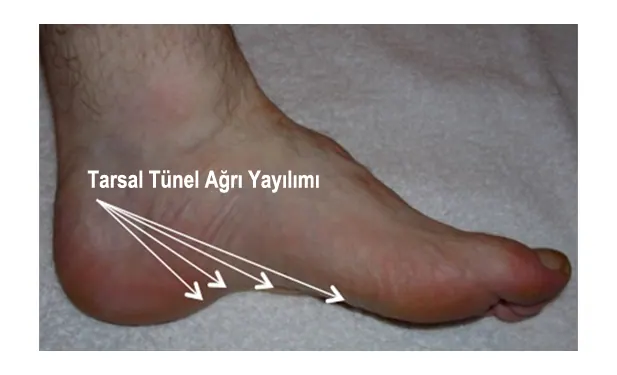
Tarsal tunnel syndrome is pain spreading to the ankle, heel and sole caused by compression of the tibial nerve – the continuation of the sciatic nerve to the foot – inside the tarsal canal at the level of the ankle. After injury to the nerve passing through the ankle, pain and numbness mainly in the sole, toes or top of the foot may spread up the leg to the knee as the disease progresses.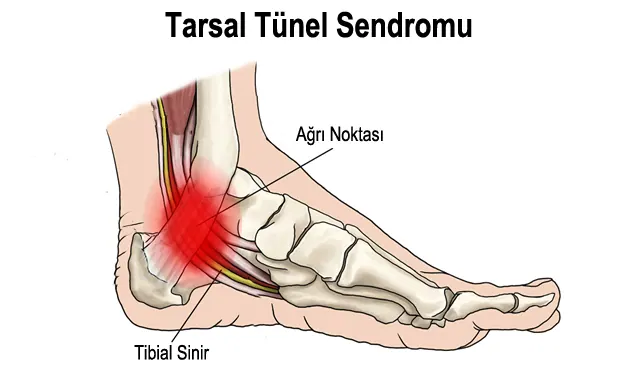
Who gets tarsal tunnel syndrome?
Tarsal tunnel syndrome, rarer than other nerve entrapment syndromes, occurs in people who stand all day or after a sudden blow to the ankle or a sprain. Because it is a foot condition, putting too much weight on the feet during the day triggers it.
Not to be confused with heel spurs
Patients with tarsal tunnel syndrome may have numbness in the foot, sometimes weakness, tingling and loss of sensation. Sometimes there are stabbing or pins-and-needles pains, tingling, numbness and a burning feeling. In some people the pain progresses gradually; in others symptoms appear suddenly.
Tarsal tunnel syndrome is often confused with heel spurs. In fact, many TTS patients are treated for months for a heel spur, and TTS is only diagnosed when they do not respond.
How is tarsal tunnel syndrome diagnosed?
The diagnosis is made first from the complaints and examination. It is confirmed if a nerve test called EMG (electromyography) supports it. In patients who still cannot be diagnosed, a nerve block test is used: local anaesthetic is injected around the nerve, and if the foot pain goes away the diagnosis is confirmed.
Because infection, injury or tumours in the foot can also damage the nerve, these causes should be ruled out; blood tests and MRI may be requested for this.
Treatment of TTS
If the pain is not very severe, medication that reduces inflammation and relieves nerve compression can be used. Avoiding tiring the ankle as much as possible and applying ice will ease the pain and help healing. Suitable orthopaedic insoles and special exercises for TTS are important in reducing complaints.
For persistent tarsal tunnel pain, a radiofrequency (RF) nerve block can be performed.
In patients whose complaints do not ease despite all these measures, or in whom EMG shows severe nerve compression, the area where the nerve is compressed is opened surgically and the nerve is released.
The information on this page is for general information only and does not replace an examination and diagnosis.