
Compression at the wrist of the median nerve, which provides movement and sensation to the fingers, is called "carpal tunnel syndrome". It is the most common nerve entrapment.
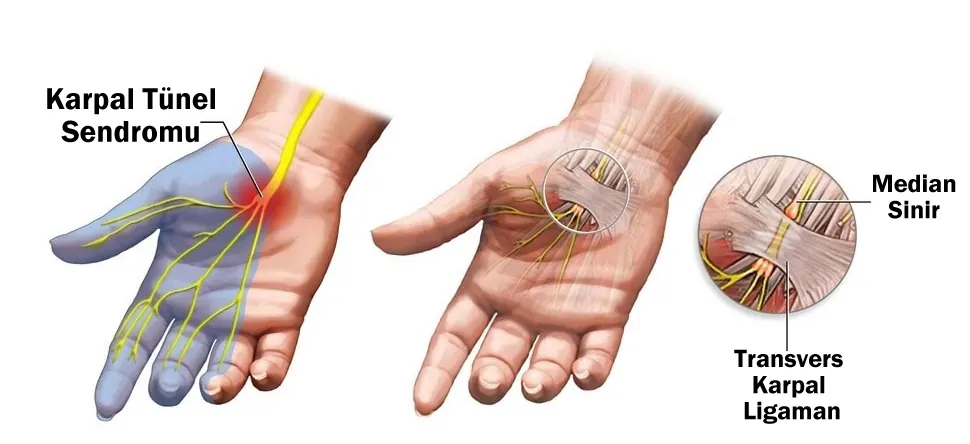 The carpal tunnel is a narrow passage in the middle of the wrist whose floor is formed by the wrist bones and whose roof is a ligament called the transverse carpal ligament. The median nerve passes through this tunnel together with tendons and vessels. If the ligament covering the tunnel or the structures inside it thicken and swell, the median nerve is compressed in the narrow, rigid carpal tunnel.
It is common in women and over the age of 35
Carpal tunnel syndrome is more common in women and between the ages of 35 and 55, especially in housewives and people who work with their hands. It is often said to be more common in people who spend long hours at a computer, with the wrist constantly bent (typing, keyboard, mouse, etc.), but there is no firm evidence for this.
Apart from working conditions, it is also common in people with chronic diseases that affect the immune system such as gout, severe obesity, diabetes, rheumatoid arthritis and hypothyroidism, in pregnant women, in parents of twins who constantly carry them, and in people who have sprained or broken their wrist.
Pain and tingling are the most important symptoms
The most important symptoms are pain and tingling, which most people ignore at first. Numbness and tingling are felt in the thumb, index finger, middle finger, the outer half of the ring finger and the palm.
At first the pain and numbness are mild and occur at night, then become more severe. Patients wake up at night and shake their hands for relief. Later the pain continues throughout the day, and as the muscles weaken, patients start dropping things they hold.
What is the treatment for carpal tunnel syndrome?
When the condition is recognised early, complaints can be reduced with a wrist splint and painkillers. A cortisone injection can be given to reduce swelling in the wrist.
If there is no result despite all these measures, or if the compression is moderate to severe, the nerve should be released surgically before muscle weakness begins; otherwise the damage becomes permanent and numbness and weakness in the hand do not improve even after surgery.
The operation can be performed with an open or closed (endoscopic) technique. In closed surgery there is no incision in the palm, so patients recover earlier and there are no scar problems.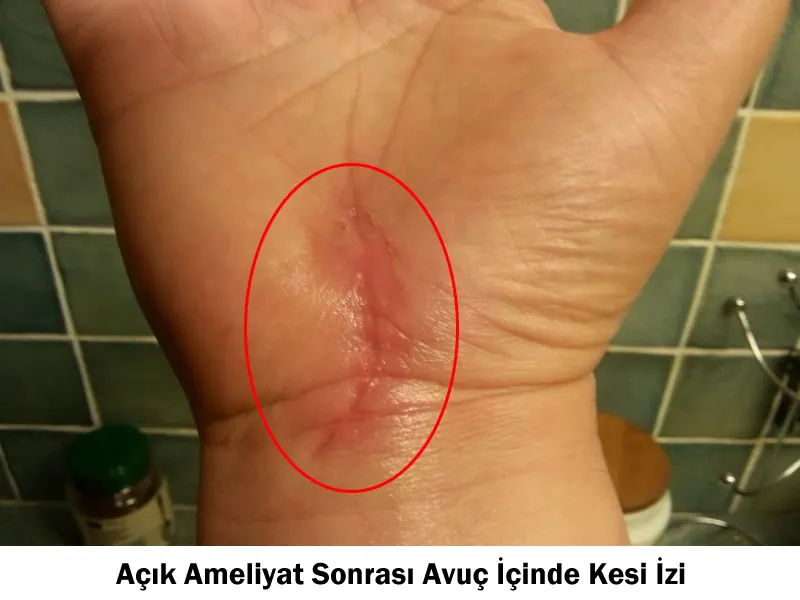
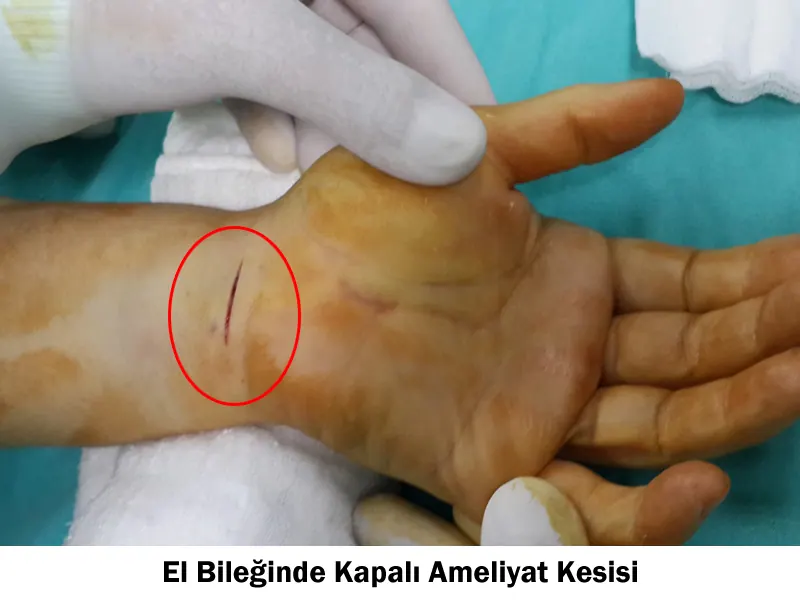 In both cases patients should not do heavy work with their hands for 6 weeks. Pain and weakness usually improve within 2–3 months after surgery, but complete recovery can take from six months to a year.
The information on this page is for general information only and does not replace an examination and diagnosis.