
How common are hip dysplasia and dislocation in children?
Hip laxity (instability), hip dysplasia and hip dislocation are the most common musculoskeletal problems in newborn babies.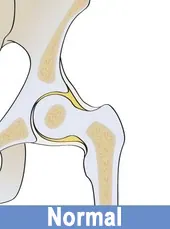 Hip dislocation, or developmental dysplasia of the hip, is a condition in which the hip joint does not develop properly in babies and young children. The part of the thigh bone (femur) that joins the hip is ball-shaped and sits in a round socket (acetabulum) in the pelvis, forming the hip joint.
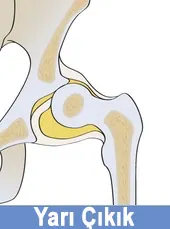 In developmental hip dysplasia the socket is too shallow and the femoral head cannot sit firmly in place, so the hip joint is loose. If over time the socket becomes even more inadequate, the femoral head moves out of the socket and a partial dislocation (subluxation) develops.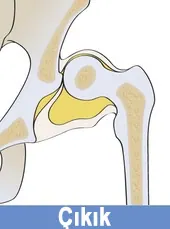
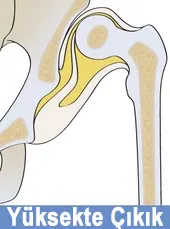
If this is still not treated, a complete dislocation occurs.
What causes hip dislocation? What are the risk factors?
Although the cause of hip dislocation is not yet fully known, the main factors that increase the risk are:
- Low amniotic fluid levels in the womb,
- Breech presentation/birth,
- First baby: in a first pregnancy the uterus has not yet fully relaxed and may press on the baby, triggering hip dislocation. Hip dysplasia is therefore more common in first pregnancies.
- Female sex: girls are 4–5 times more likely to have hip dislocation.
- Family history of hip dislocation: this increases the baby's risk 12-fold, showing how important genetic factors are.
Hip dysplasia is one of the most common problems found in newborn examinations. It occurs when a baby is born with an unstable, loose hip joint. Loose ligaments that hold the hip in place and failure of the thigh bone to sit in the socket lead to hip dislocation in some babies. If this is not prevented early, the hip joint remains partly or completely dislocated. Diagnosing the problem early, before the hip dislocates or becomes stuck in a bad position (for example when the baby is tightly swaddled), makes treatment easier. In infancy the hips should be left free to move, and the legs should not be fully straightened and bound.
What are the signs of hip dislocation?
Sometimes babies show no signs even though the hip is dislocated, so regular check-ups are essential for early diagnosis. When it is suspected, a hip ultrasound in the first 4 months, or a hip X-ray after 4 months, should be done to make the diagnosis.
The most obvious signs are delayed gross motor development (sitting, crawling, walking), a difference in length between the legs, and limited hip movement, for example difficulty spreading the legs apart. Babies with hip dislocation start walking later. Once they walk, they limp because one leg is shorter than the other.Treatment
Treatment is given in 4 different time periods:
1- In babies diagnosed early, treatment is non-surgical. In the first 6 months hip dislocation can be treated with just a splint and a few simple measures. One of the commonly used methods in this period is the "Pavlik harness" or "Frejka pillow". This harness holds the baby's legs apart and drawn up towards the tummy, so that the hip settles into its socket. Depending on progress, the harness is worn day and night for about 2–6 months. If treatment is given in the first 6 months, the rate of complete recovery is close to 100%.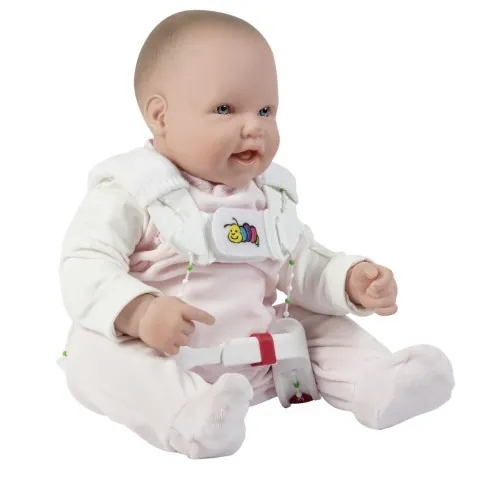
- In babies diagnosed between 9 and 12 months, the preferred method is assessment of the joint by injecting contrast under anaesthesia (arthrography) and, depending on the result, casting or open surgery to put the dislocation back in place.
- In babies older than 12 months, the dislocated femoral head must be placed in the socket by open surgery under general anaesthesia. A cast is applied after surgery.
- In patients over 18 months with insufficient socket development, operations to improve coverage of the socket must be performed with open surgery.
The information on this page is for general information only and does not replace an examination and diagnosis.