
What is arthroscopic (keyhole) surgery?
Arthroscopic surgery means entering the joint through small holes in the skin, viewing the inside of the joint with an imaging instrument called an arthroscope, examining it with various instruments and performing the necessary surgical procedure.
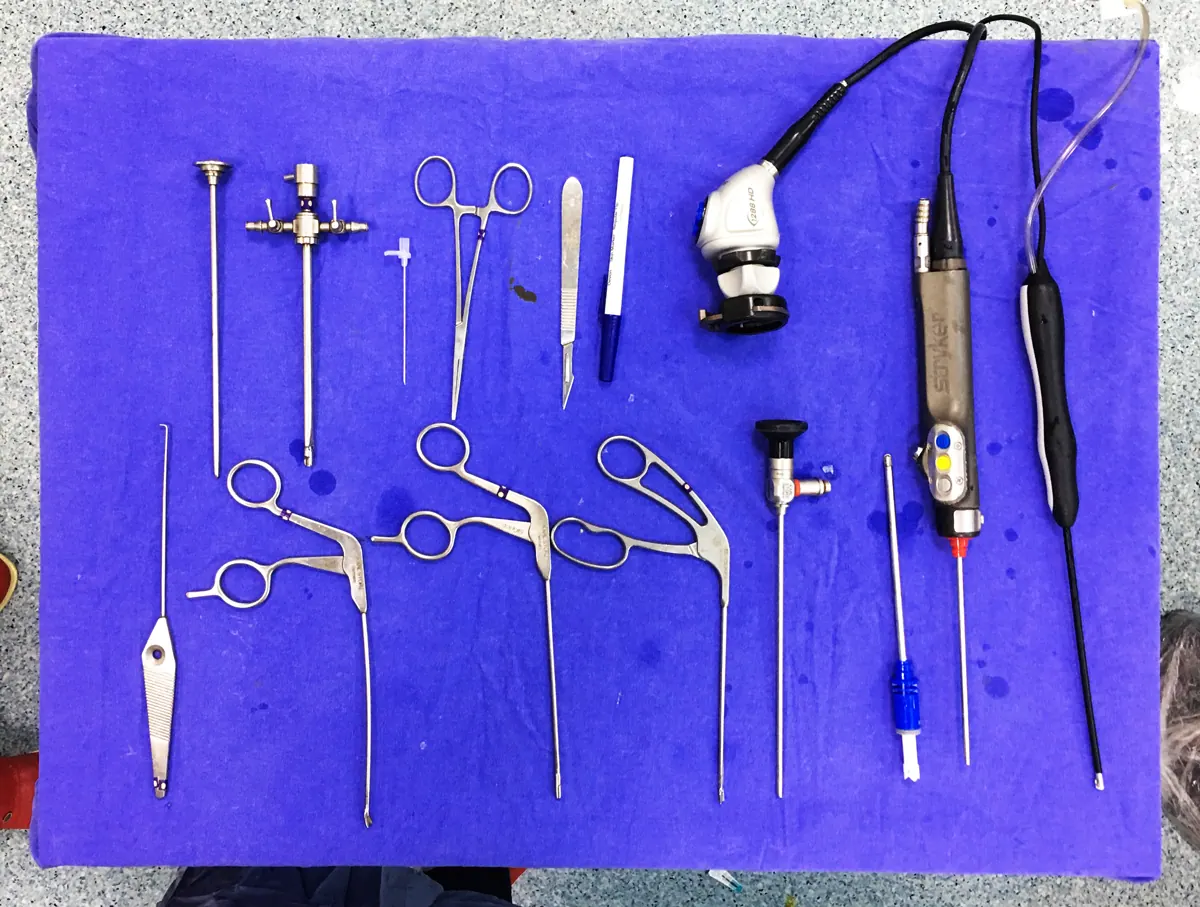
How is arthroscopic surgery performed?
The arthroscope is a tube-shaped instrument containing fibre-optic strands that carry light and glass lenses that carry the image. A camera is usually attached to the back of the arthroscope and the image is transmitted to a screen.
During arthroscopy, probing instruments, long-tipped scissors, rotating instruments with mechanical cutting tips called shavers, and radiofrequency devices are also used for the surgical procedure.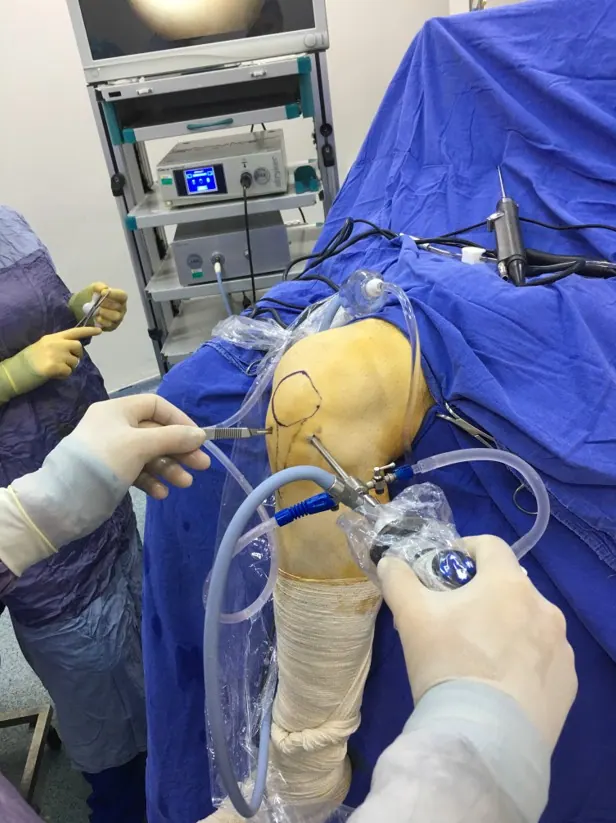
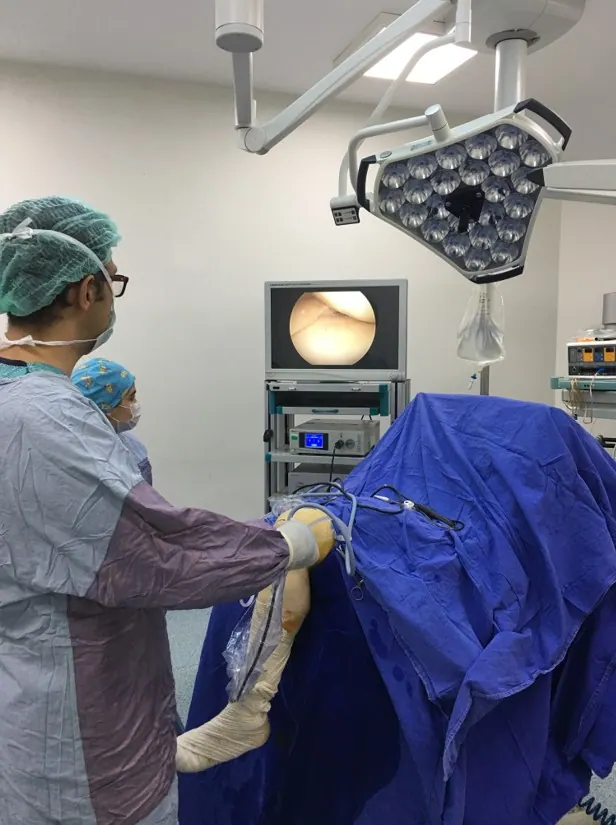 After the joint is placed in a specific position, the arthroscope is inserted into the joint through holes made at points corresponding to the joint space. The images are watched on the screen with the camera attached to the arthroscope. A light source and a saline tube are connected to the arthroscope. Fluid is given into the joint so that the image is larger and clearer. A second hole is made for the surgical instruments. Thanks to this system, the inside of the joint is seen live on the screen while the necessary surgical procedure is performed at the same time.
On which joints is arthroscopic surgery performed?
- Knee (most common)
- Shoulder
- Hip
- Ankle
- Elbow
- Wrist
- Finger joints
What procedures can be done with arthroscopic surgery?
Arthroscopic surgery is not only about looking inside the joint and making a diagnosis; it is in fact the surgical procedure performed after the diagnosis has been made. The main surgical procedures performed inside the joint are:
- In the knee:
- Trimming of meniscus tears (meniscectomy)
- Repair (suturing) of meniscus tears
- Anterior cruciate ligament repair (ACL reconstruction)
- Posterior cruciate ligament repair (PCL reconstruction)
- Plica excision
- In the shoulder:
- Suturing the capsule to the bone (Bankart repair, SLAP repair)
- Rotator cuff repair
- Acromioplasty (shaving of the acromion)
- In the hip:
- Repair of the capsule attachment (labrum repair)
- Treatment of hip impingement syndrome (FAI: femoroacetabular impingement)
- Removal of foreign bodies and cartilage fragments (loose bodies, "joint mice") from the joint
- Cleaning of the joint lining (synovectomy)
- Soft release or tightening of various tissues
- Shaving of bone surfaces
What are the advantages of arthroscopic surgery over open surgery?
1. Tissues are repaired through a smaller incision. It is more aesthetic.
2. Because the tissues are seen magnified, less damage is done to them
3. There is less bleeding
4. Recovery is faster
5. The complication rate is low.
What are the complications of arthroscopic surgery?
1. Bleeding
2. Cartilage damage
3. Nerve damage
4. Infection
5. Blood clots in the legs
The information on this page is for general information only and does not replace an examination and diagnosis.