
Watch out for scaphoid fractures!
The scaphoid, one of the 8 small bones of the wrist, is among the most important bones of the hand; unfortunately it is also the one that breaks most often, and if untreated it can cause serious problems. These 8 small wrist bones change position relative to each other in many ways even during a simple movement, and the main player and cornerstone of all these complex movements is the scaphoid. If it breaks in a wrist injury, the whole balance of the wrist joints is disturbed.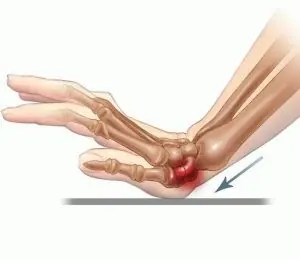
How does a scaphoid fracture occur?
Scaphoid fractures are very common. The bone can break even after a minor accident or fall that can happen at any moment in daily life – especially when falling on an outstretched hand with the palm open. They are typically fractures of young and middle-aged people.
Scaphoid fractures are often missed!
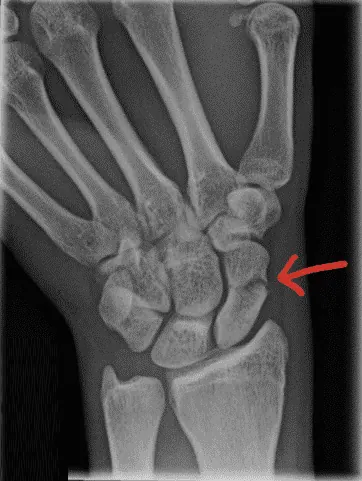
Correct diagnosis of this important fracture is crucial for the treatment that follows, because the fracture may not be visible on X-rays taken right after the injury – a feature specific to the scaphoid. The initial pain may ease within days or weeks, and swelling may be slight. Because there is no visible deformity, many people dismiss it as a simple wrist sprain, so the diagnosis is usually made late. A scaphoid fracture should be suspected especially in young people who fall on an outstretched hand. If there is tenderness over the scaphoid on examination, suspicion should remain even if the X-ray shows no fracture; at this stage either the wrist should be immobilised in a splint for 2–3 weeks as if a fracture were present, or an MRI should be taken.
How is a scaphoid fracture treated?
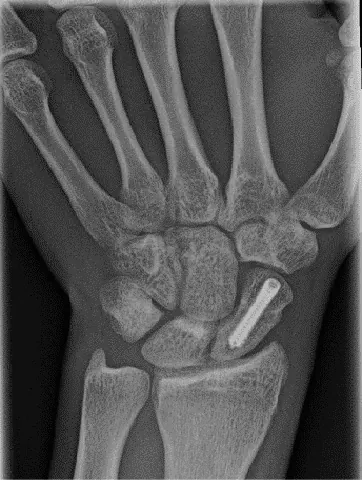
Unfortunately this small but important bone usually heals with difficulty. The scaphoid does not have a good blood supply, and after a fracture the circulation worsens further, delaying healing. Also, because it is a key bone in a very mobile structure, it is impossible to prevent small movements completely even when trying to keep it still. If the fracture is not displaced, it is usually treated with a cast; because this bone heals more slowly than others, the cast stays on for at least 9 weeks. If the fracture is displaced, surgery is needed: the fracture is anatomically realigned with a closed or open method and fixed with screws to keep it in position until it heals. It should be remembered that scaphoid treatment is demanding and takes months. Sometimes a second operation is needed because the bone fails to heal. After healing, the blood supply of the bone is monitored with MRI for two years.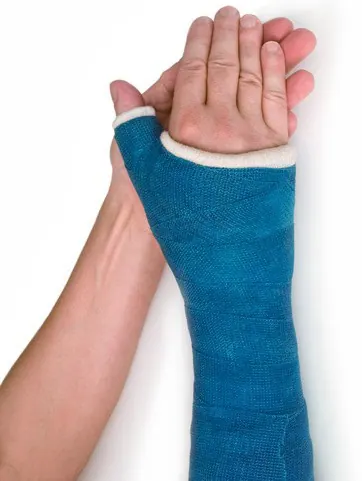
The information on this page is for general information only and does not replace an examination and diagnosis.