
Sever's disease is an inflammatory condition of the growth plate of the heel bone in growing children. It is more common in children with a tight Achilles tendon. During activity, the Achilles tendon strains the growth plate of the heel bone (calcaneus) where it attaches (apophysitis), causing inflammation and pain.
Who gets Sever's disease? What are the signs?
Sever's disease is especially common in boys aged 8–14. The child complains of heel pain, especially after sport or a lot of running around. The pain usually eases with painkillers and rest.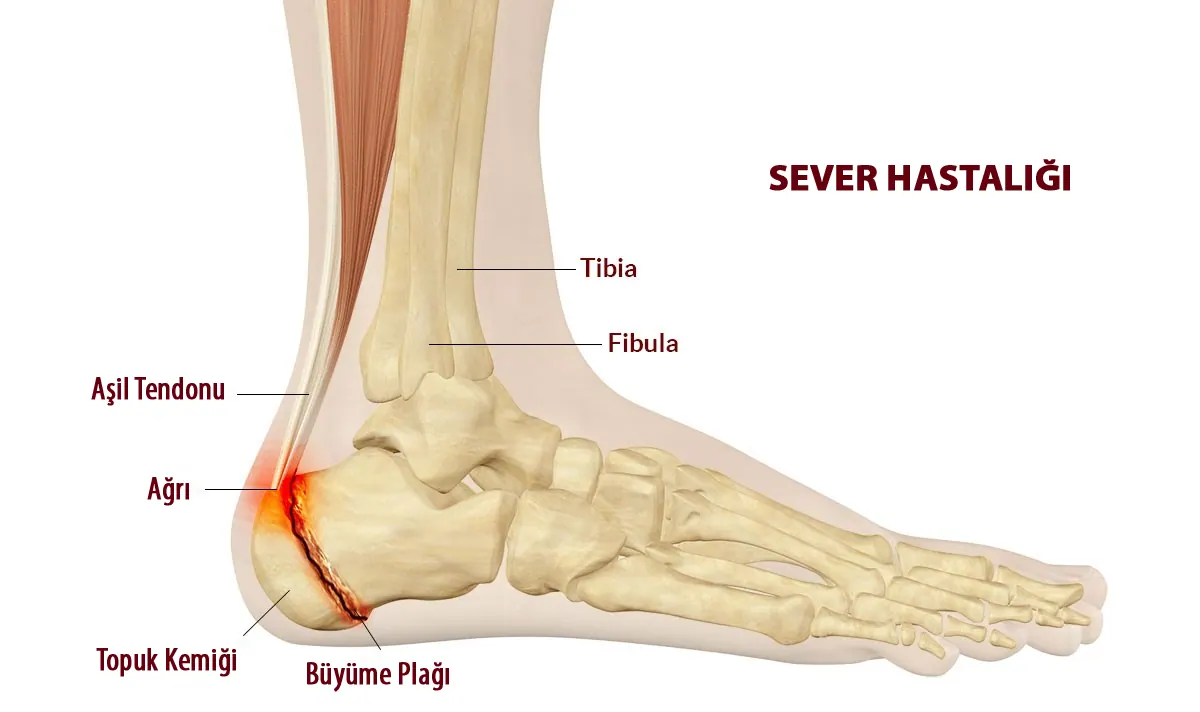
How is Sever's disease diagnosed and treated?
The diagnosis is made from the patient's age, complaints and examination findings. If needed, an ankle X-ray may show increased brightness of the heel bone growth plate.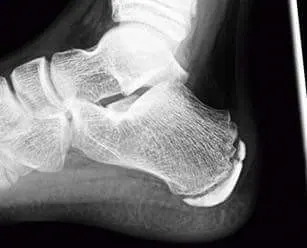 Treatment first aims to reduce strain and friction on the heel. Comfortable sports shoes are recommended, and heel cups raising the heel by 1–2 cm can be placed in the shoes. Anti-inflammatory painkillers appropriate for the child's age are given for the pain. Stretching exercises are recommended to reduce tightness of the Achilles tendon. For patients whose pain does not go away despite all these measures, a resting cast is applied to rest the heel completely.
Once the growth plate of the heel bone closes, Sever's disease disappears completely.
The information on this page is for general information only and does not replace an examination and diagnosis.