
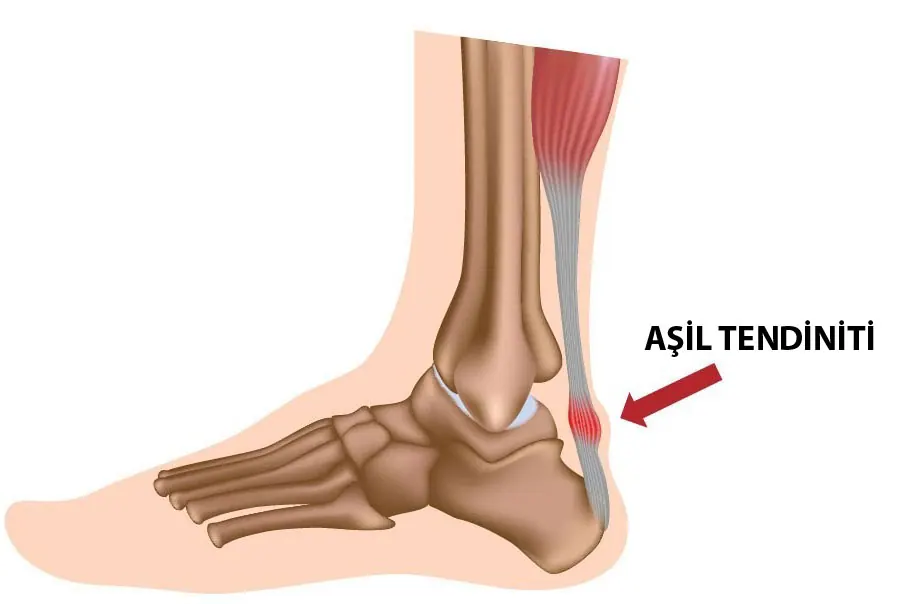
Before muscles attach to bone they turn into strong white fibres called tendons. If a tendon is suddenly strained beyond its strength or exposed to long-term repetitive loading, tendon inflammation (tendinitis) develops. The Achilles tendon is the end part of the calf muscles that attaches to the heel bone, and inflammation of this tendon is called Achilles tendinitis.
How does Achilles tendinitis develop?
The Achilles tendon lifts the heel bone during walking and running. Long periods of walking, running or standing overload it, which can result in Achilles tendinitis. If untreated, the tendon wears and can eventually rupture (Achilles tendon rupture); if the tendon ruptures, a doctor should be seen without delay.
What are the symptoms of Achilles tendinitis?
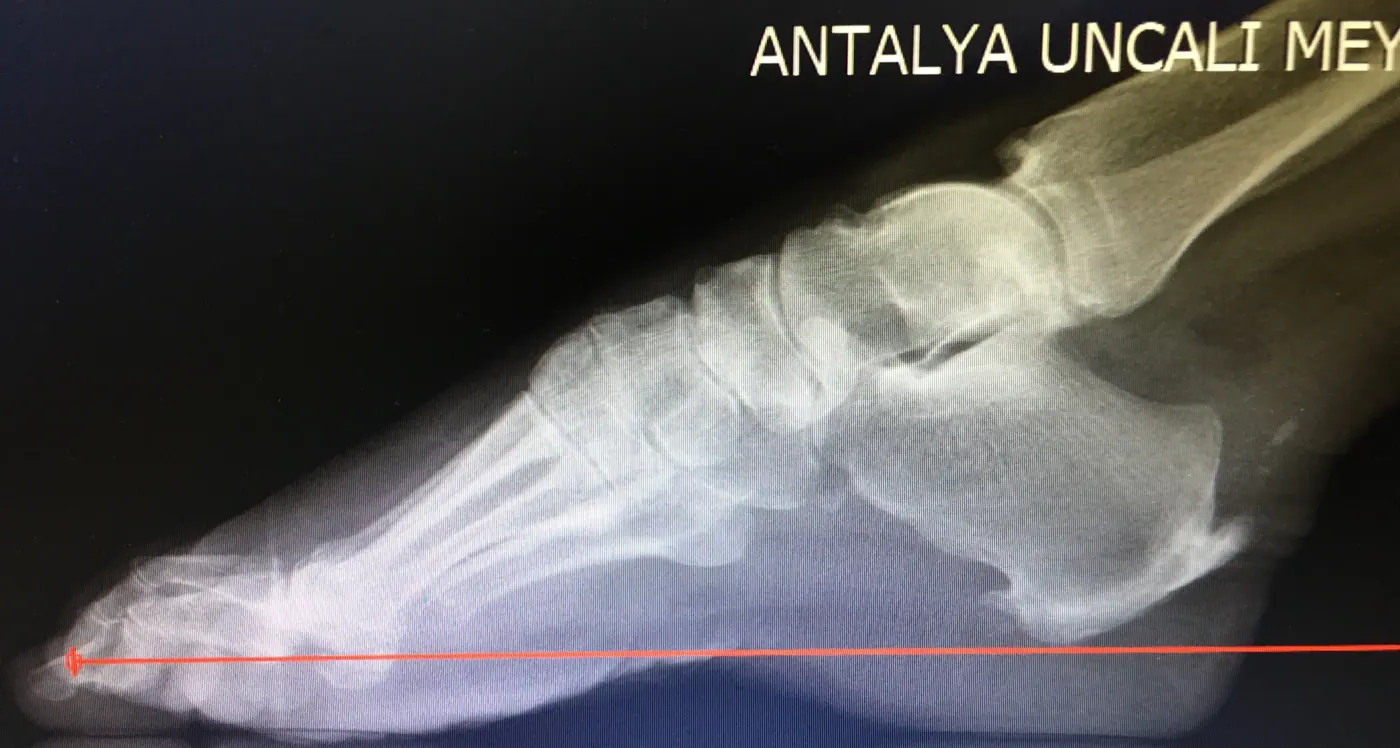
Achilles tendinitis occurs in two forms: in the middle part of the tendon or at its attachment to the heel. Tendinitis in the middle part is usually seen in young, active people, but it is most common at the attachment to the heel bone, which is mostly seen in less active older people.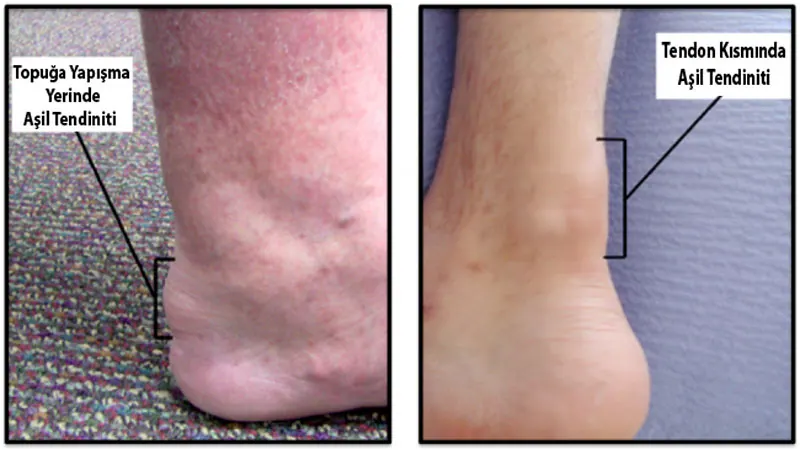 Achilles tendinitis (tendinopathy) starts with pain and stiffness at the back of the ankle. The pain may appear gradually and is usually worst on waking in the morning and with the first steps, easing as the tendon warms up. It increases again after running or other demanding sports. Over time walking or going up and down stairs becomes difficult because of pain. Thickening and swelling are seen in the tendon or at its attachment, and a bony spur forming at the attachment to the heel increases the swelling further.
What are the risk factors for Achilles tendinitis?
- Male sex
- Older age
- Flat feet and excess weight
- Training conditions: running uphill, worn shoes, cold climate
- Psoriasis, high blood pressure
- Medication: use of fluoroquinolone antibiotics
How is Achilles tendinitis diagnosed?
Examination is sufficient for diagnosis, but ultrasound and MRI may be requested to determine the degree of tendon damage and decide on treatment.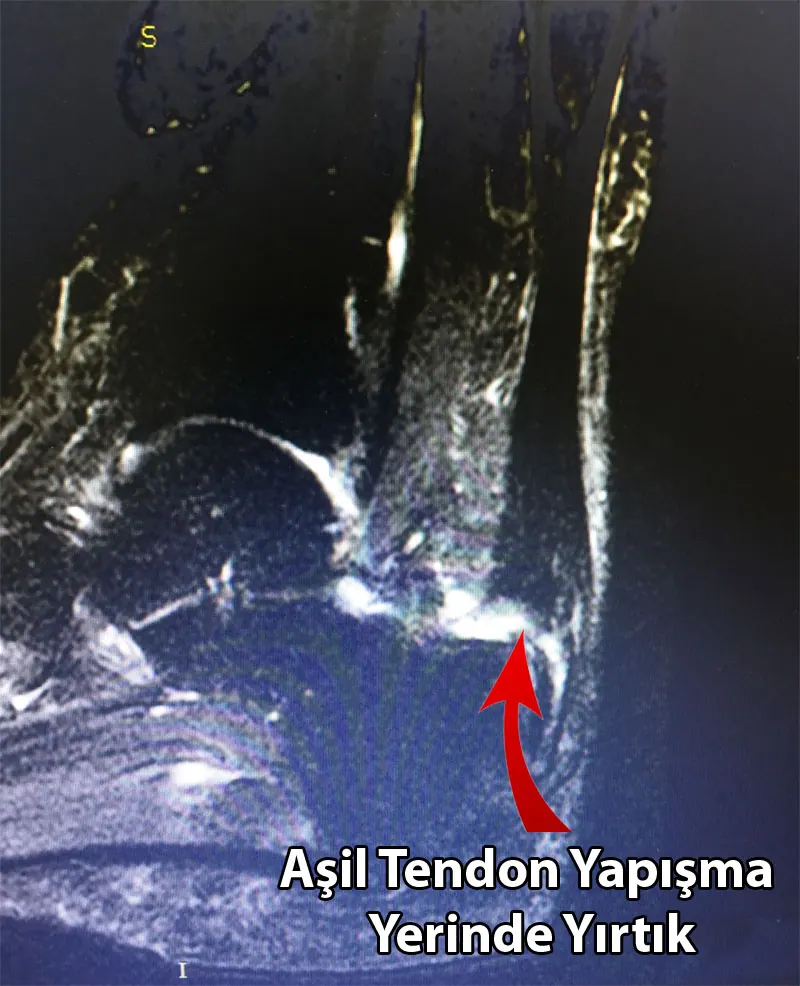
How is Achilles tendinitis treated?
Treatment first aims to reduce pain and tenderness. Activities that increase your pain and high-effort sports should be avoided. Heel-raise insoles lift the heel and reduce the load on the tendon. Cold application and painkillers are used to settle the inflammation. Achilles stretching exercises prevent overstraining the tendon when starting the first walk of the morning or sports activity.
With all these measures, recovery from early Achilles tendinitis takes 3–7 weeks. A cast or brace can be used in patients who do not benefit enough.
ESWT and biological treatments can be used to relieve pain.
Achilles tendinitis that has not healed after 6 months or more despite all treatment (chronic Achilles tendinitis/tendinosis) requires surgery.
If the Achilles tendon is tight, the muscle is lengthened (gastrocnemius recession).
In open surgery, if less than 50% of the tendon is damaged, the damaged area is removed and the tendon repaired; if the damage is more than 50%, a tendon transfer must also be performed.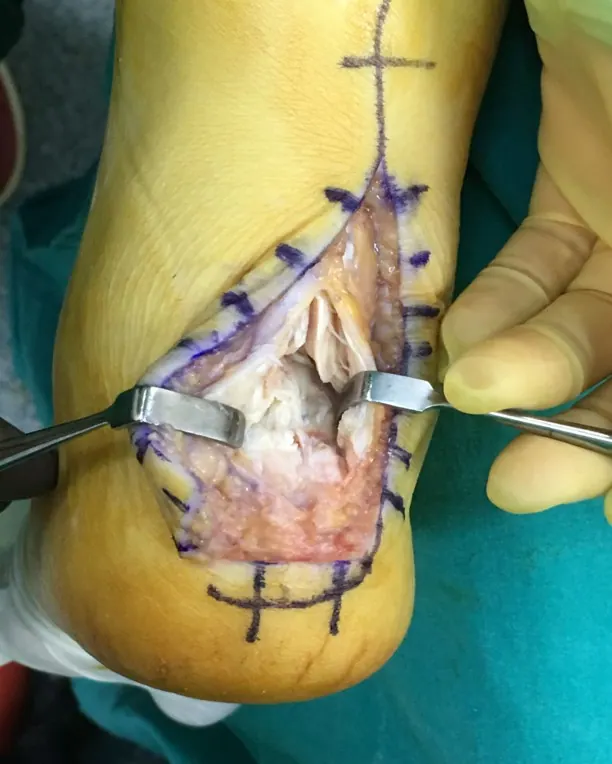
The information on this page is for general information only and does not replace an examination and diagnosis.