
When the big toe joint deteriorates, causing reduced and painful movement, the condition is called hallux rigidus, meaning "stiff toe". It is often confused with hallux valgus. There is not as much deformity of the toe as in hallux valgus, and because of the joint damage, toe movements are much more painful.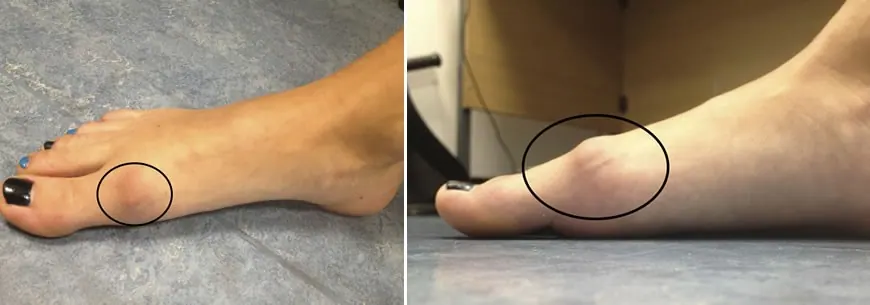
What are the symptoms of hallux rigidus?
As the joint between the metatarsal and the big toe (the metatarsophalangeal (MTP) joint) deteriorates, the person complains of pain, has difficulty walking, and day by day the toe becomes unable to bend. Over time bony spurs form and make wearing shoes difficult.
What causes hallux rigidus?
The most common cause is osteoarthritis that develops with age, but toe fractures involving the joint, serious injuries, rheumatic diseases and poor choice of shoes are also causes. Frequently working in a squatting position or on tiptoe (e.g. ballet) and severe flat feet can also be among the causes.
How is hallux rigidus diagnosed?
An X-ray taken after examination by an orthopaedic specialist is enough for the diagnosis.
How is hallux rigidus treated?
The patient's other illnesses, whether there are circulation problems in the foot, age and level of daily activity determine the treatment. Depending on the complaints and the degree of cartilage wear, insoles and suitable shoes can be the first step. If the patient still has difficulty in daily life despite these measures, surgery is preferred.
Which operations are performed for hallux rigidus?
Depending on the severity of the disease and the patient's age and expectations, one of three types of surgery can be performed:
1- Joint debridement (cleaning):
In patients with mild to moderate cartilage wear, painful joint movement and bony spurs that make wearing shoes difficult, surgically cleaning the joint, shaving the bony spurs and releasing the soft tissues gives pleasing results.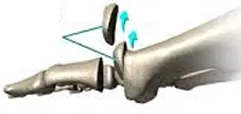
2- Joint fusion (arthrodesis):
This is performed in patients whose joint cartilage is completely worn, whose toe movements are very restricted and who have severe pain. During the operation the worn cartilage is completely removed and the joint is fixed with a plate or screws. Although arthrodesis may seem frightening to many patients, after this operation the pain goes away permanently and the person can walk more comfortably.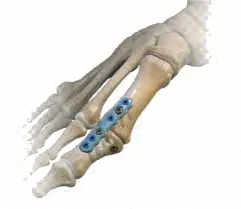
3- Joint replacement (arthroplasty):
As with the knee and hip, replacement surgery can also be done on toe joints. A special plastic surface is placed on one side of the joint and a metal head on the other, so the joint remains mobile; however, the patient should be told that prostheses have a limited lifespan.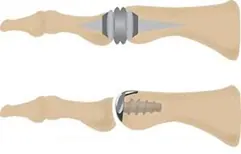
The information on this page is for general information only and does not replace an examination and diagnosis.