
The Achilles tendon is a strong band of fibres connecting the muscles at the back of your calf to your heel bone. It carries our entire body weight and is the strongest tendon in the body. It allows us to push the foot downwards and rise up onto our toes.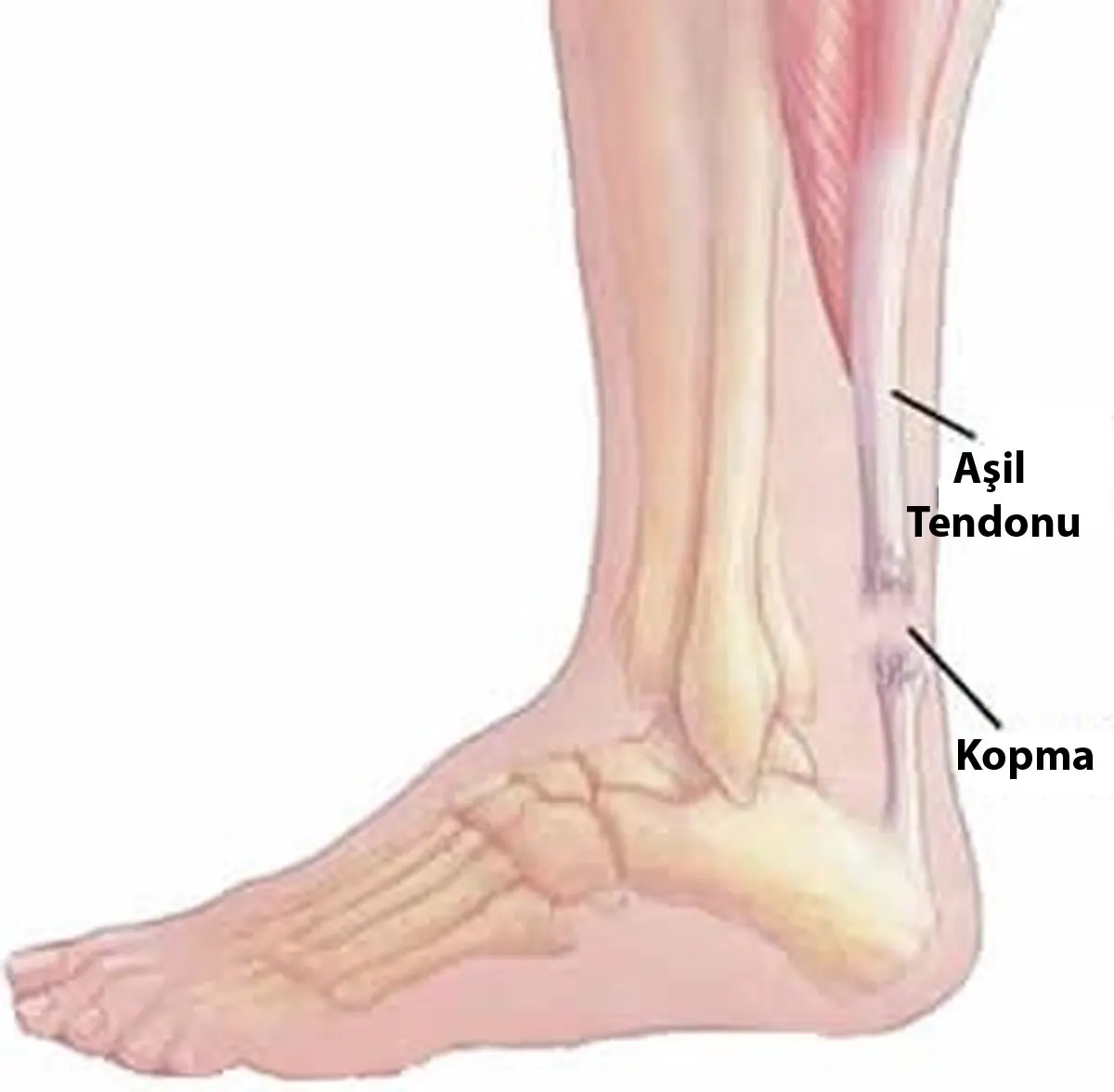
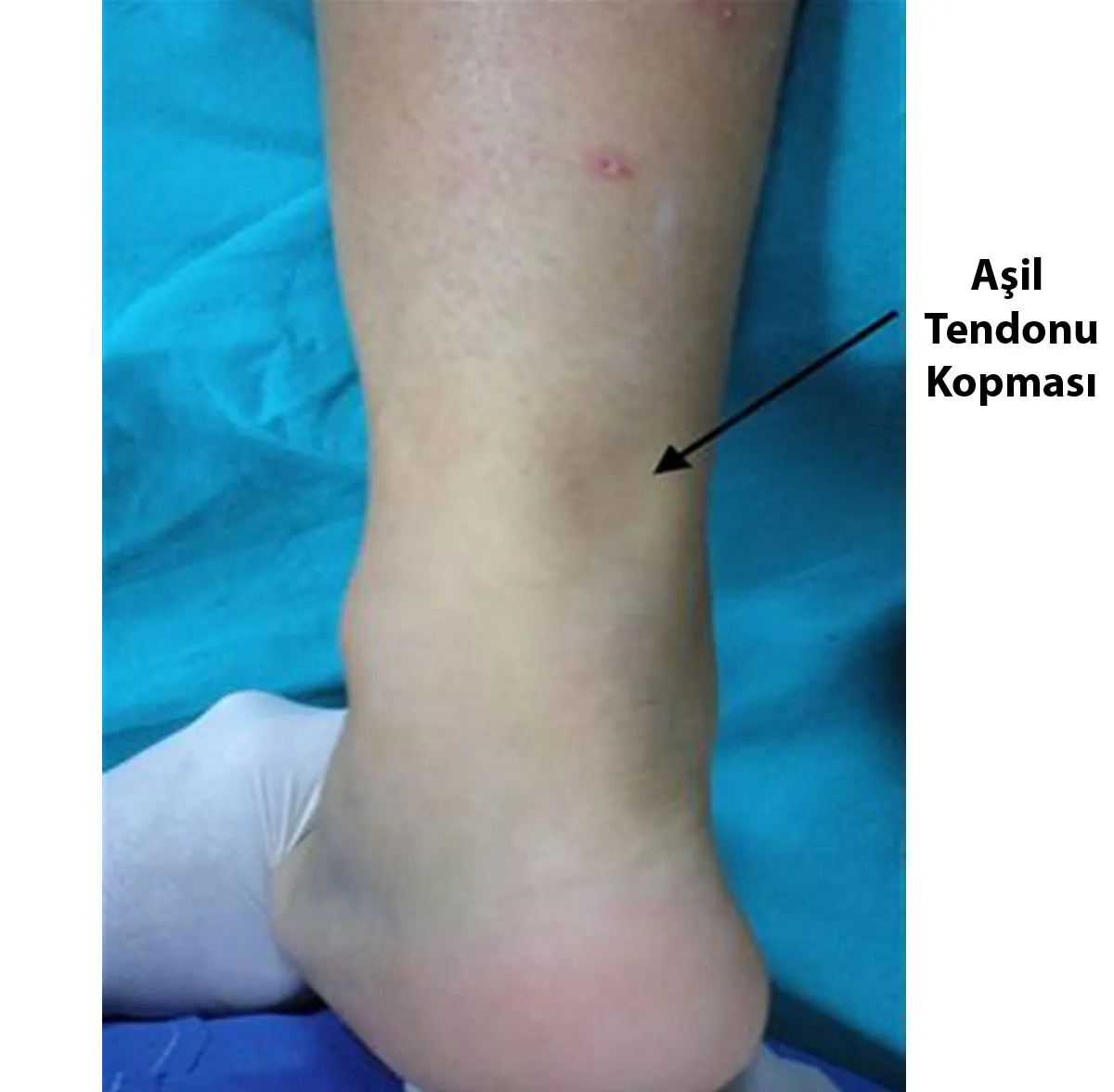
Achilles tendon injuries can occur from strain during sports that require running, jumping and sudden starts and stops (football, basketball, tennis, etc.), but the tendon sometimes ruptures without any strain at all. The tendon may rupture completely, or partial tears may occur.
What are the symptoms of an Achilles tendon rupture?
Achilles tendon rupture is most common between the ages of 30 and 40 and is five times more common in men than in women. Most people feel as if they have been kicked in the calf, with pain, swelling at the heel, difficulty pushing the foot down and a limp. A "pop" may be heard at the moment of rupture.
What causes an Achilles tendon rupture?
The rupture usually occurs about 3–4 cm above the point where the tendon attaches to the heel bone (calcaneus). This part has a poor blood supply and is the weak part of the tendon, prone to tearing. Ruptures usually result from a sudden increase in stress on the tendon during sport.
What are the risk factors?
- male sex
- older age
- use of fluoroquinolone antibiotics
- excess weight
- steroid injections
- vascular diseases
- diabetes
- smoking
How is an Achilles tendon rupture treated?
The diagnosis is made by clinical examination. Ultrasound and MRI can show where and how much of the tendon is torn.
Both surgical and non-surgical (conservative) treatments can be used.
Conservative treatment uses a cast or brace. It may be preferred for partial tears, patients who do not want or are not fit for surgery, and patients with a sedentary lifestyle. Cast treatment started within the first 48 hours after injury is as successful as surgery. However, delays of more than ten days increase the risk of re-rupture with conservative treatment.
Surgery may be preferred in young, active people doing sport and those expecting early recovery.
The Achilles tendon can be sutured with many different methods – open, closed or mini-open. Depending on the technique, the duration of the cast or brace and the time until weight-bearing vary.
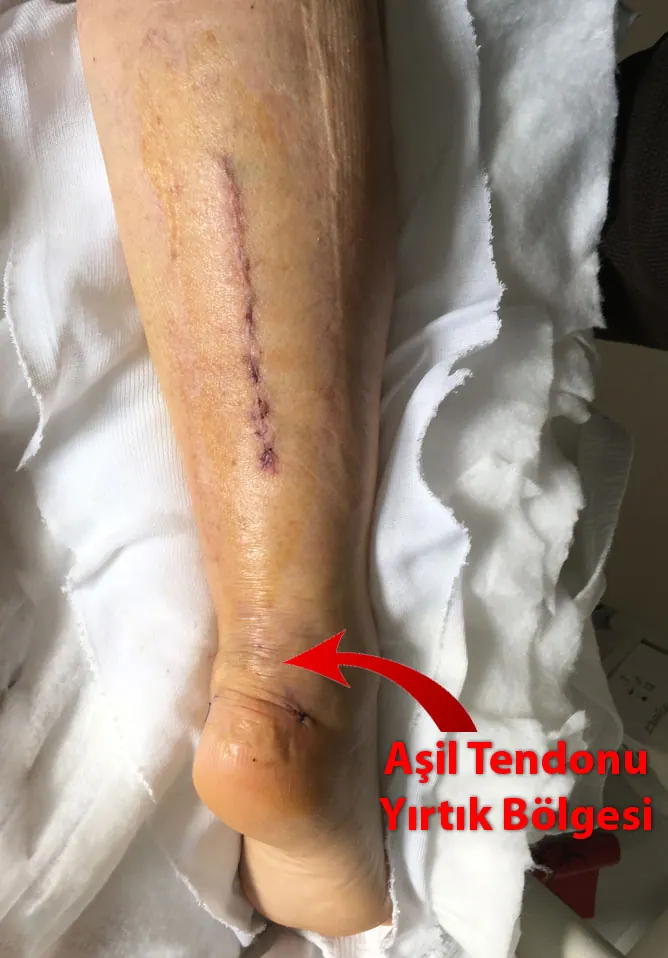
Achilles tendon repair with the closed technique, without opening the rupture site
The information on this page is for general information only and does not replace an examination and diagnosis.