
How is the shoulder built?
The shoulder joint is formed between the shallow socket of the shoulder blade and the ball-shaped surface of the upper arm bone. Unlike the hip joint, the head of the shoulder does not sit inside the socket but rests against it. For this reason the bony stability of the joint is weak, and the real stability is provided by tendons and ligaments. Thanks to this anatomy the shoulder has the widest range of motion of any joint in the body. On the other hand, in this joint with weak stability and wide movement, most problems occur in the tendons and ligaments.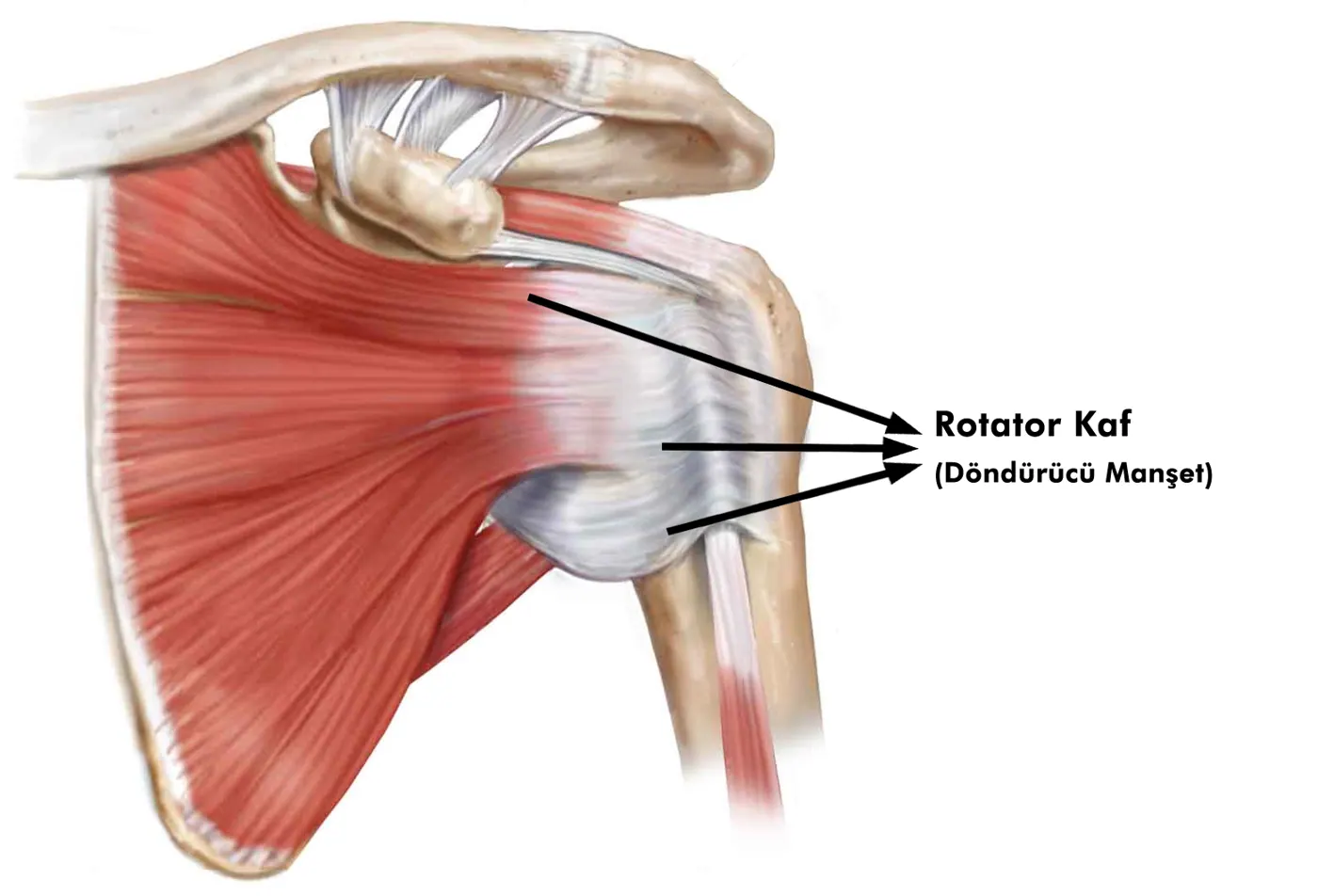 As the muscles that move the shoulder approach the joint, they become tendons and attach to each other and to the shoulder capsule. This structure is called the rotator cuff. Its job is to keep the shoulder in place and enable shoulder movements.
How do rotator cuff tears occur?
In young people, cuff tears occur after a fall or serious injury, whereas in older people worn tendons can tear with minor strain or everyday use.
What are the signs of a rotator cuff tear?
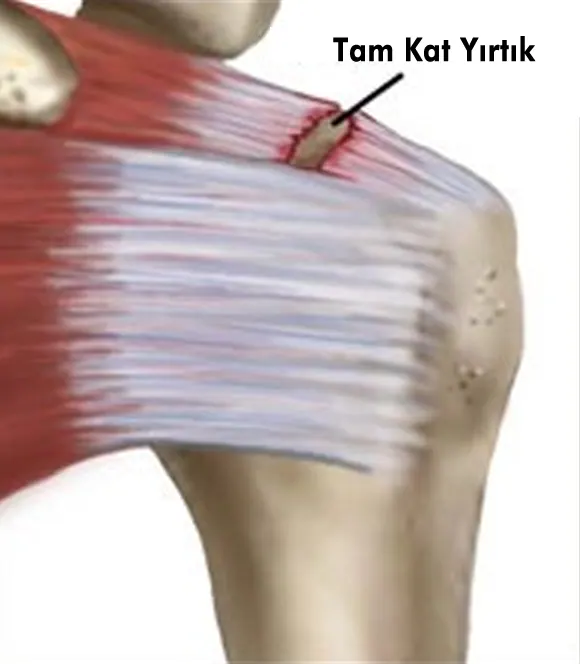
Shoulder pain occurs during strenuous activities in the day, but it mainly troubles the patient at night. The patient cannot lie on the affected shoulder. The pain starts in the shoulder and spreads to the upper arm. At first patients have difficulty with overhead activities and heavy strain; over time they struggle to raise the hand above the head. Cuff tears can be full-thickness or partial-thickness. Full-thickness tears also cause loss of strength: the patient cannot lift the arm above the head, or if asked to hold it at shoulder level has to drop it after a short time. Full-thickness tears left unrepaired for a long time disturb the shoulder's mechanics and lead to osteoarthritis and loss of movement.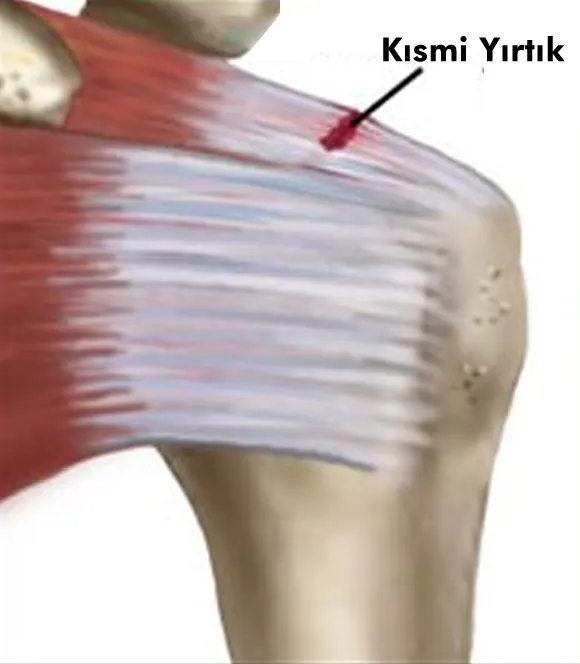
How is a rotator cuff tear diagnosed?
You should see a doctor if shoulder pain does not settle within a few weeks, or if after a shoulder injury there is pain together with difficulty lifting the arm.
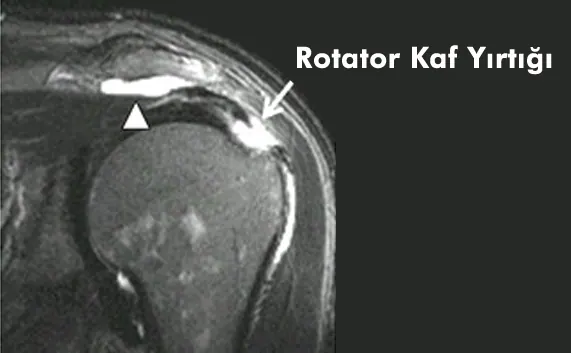
After examining your joint movement, your doctor will perform some special tests for a rotator cuff tear. Additional X-rays or CT may be requested for other diagnoses. If a tear is suspected, a shoulder MRI confirms the diagnosis and determines the size of the tear so that surgery can be planned.
How is a rotator cuff tear treated?
Depending on the patient's age and the type of tear, non-surgical or surgical treatment is chosen.
In partial or small tears, physiotherapy, painkillers, ice and injections relieve pain and increase range of motion. None of these treatments can heal the tear itself. The tear should be followed up with MRI. If the pain does not ease or the tear progresses on MRI, surgery is needed.
In full-thickness tears, young patients, people who do heavy work with their arm and patients with loss of strength, surgery is preferred directly, because an unrepaired tear will grow over time. If a tear is left unrepaired for a long time, the unused muscle turns to fat and eventually stops working. In that case even a repaired muscle will not function, and the tear may re-tear early after surgery.
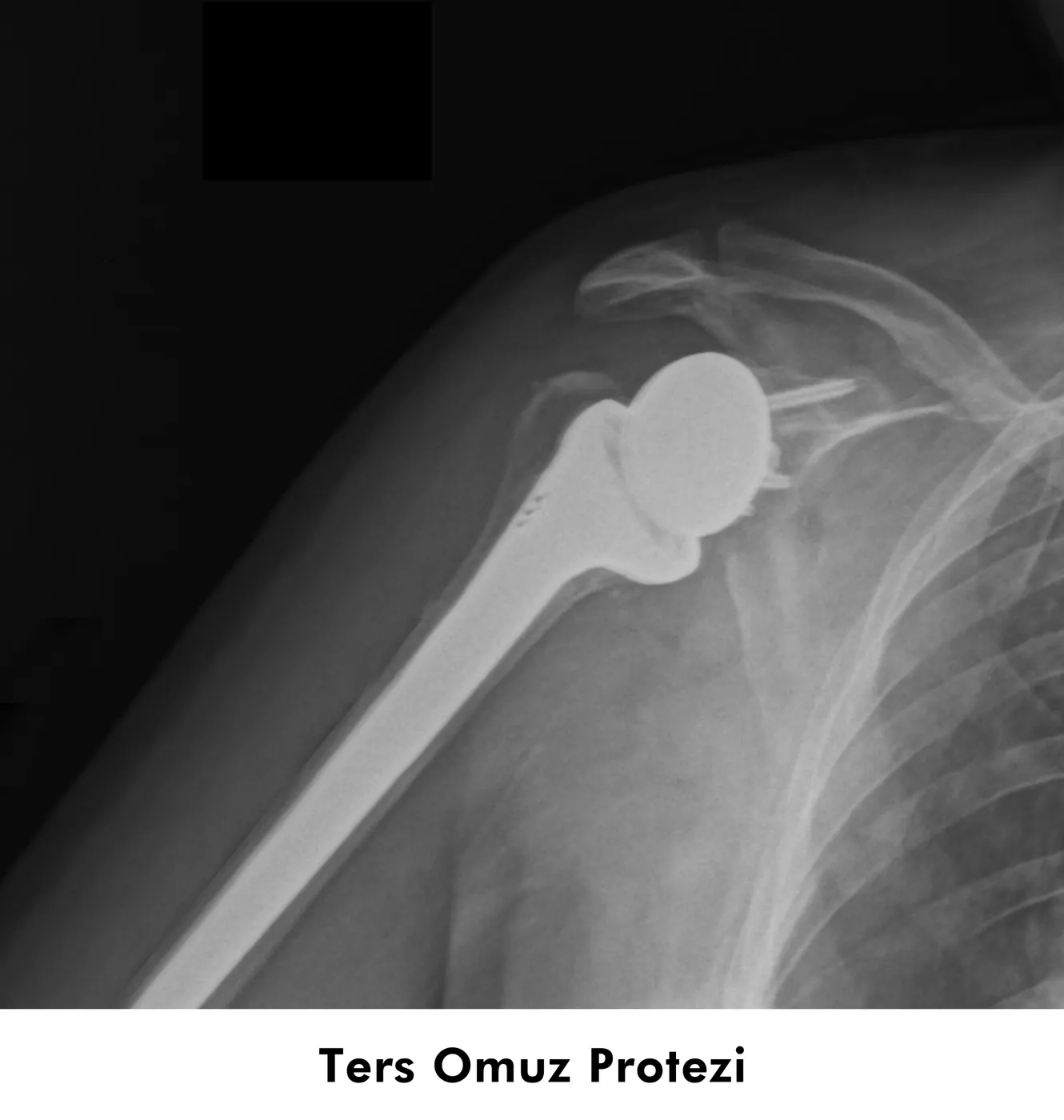
Depending on the tear and the patient's age and activity, surgery can be performed as a closed (arthroscopic) repair or as open surgery with tendon transfer. In severely neglected tears that cannot be repaired, if the patient is older and the shoulder painful, a shoulder replacement may be chosen. With a shoulder prosthesis, movements may not be exactly as before, but the pain can be relieved.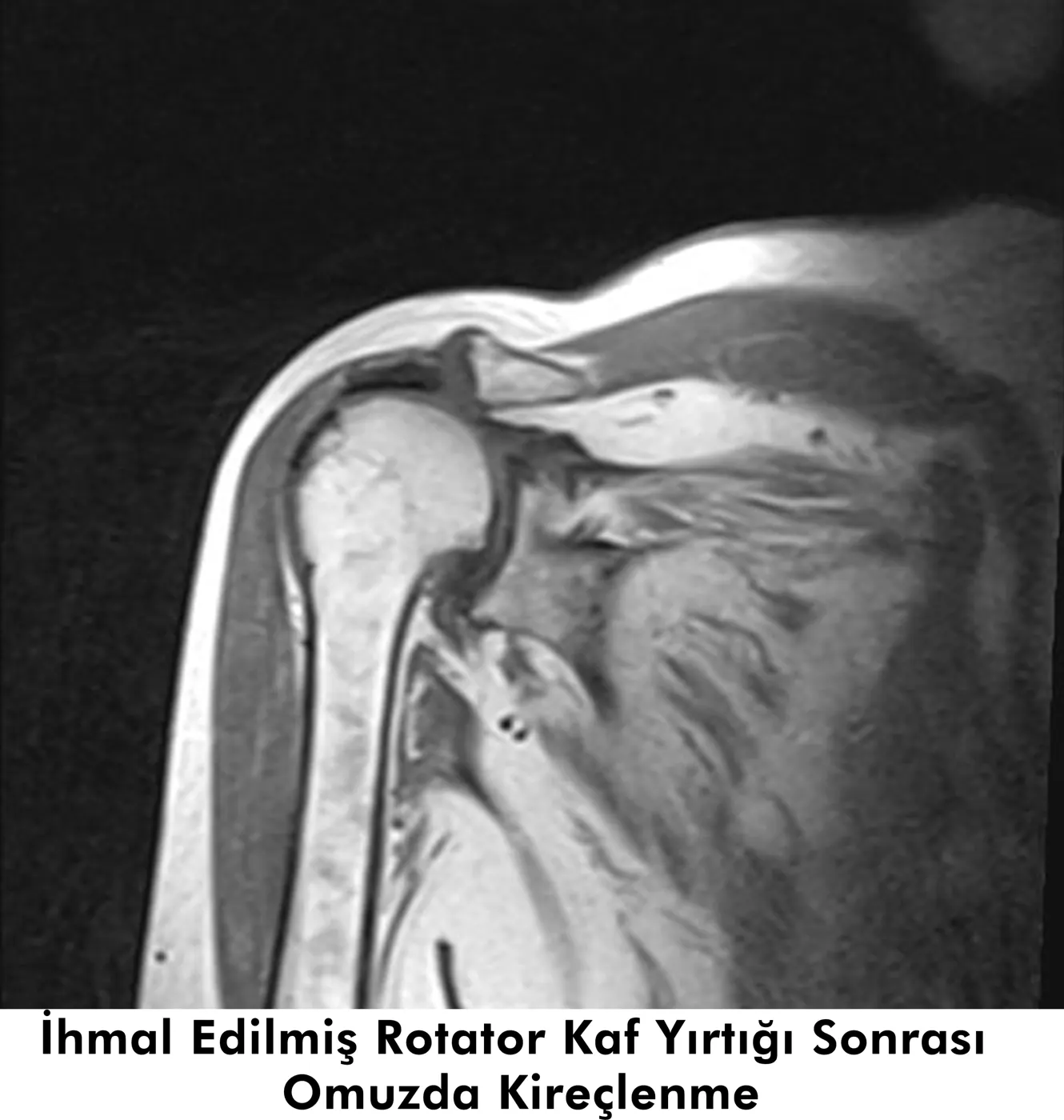
How is arthroscopic rotator cuff repair performed?
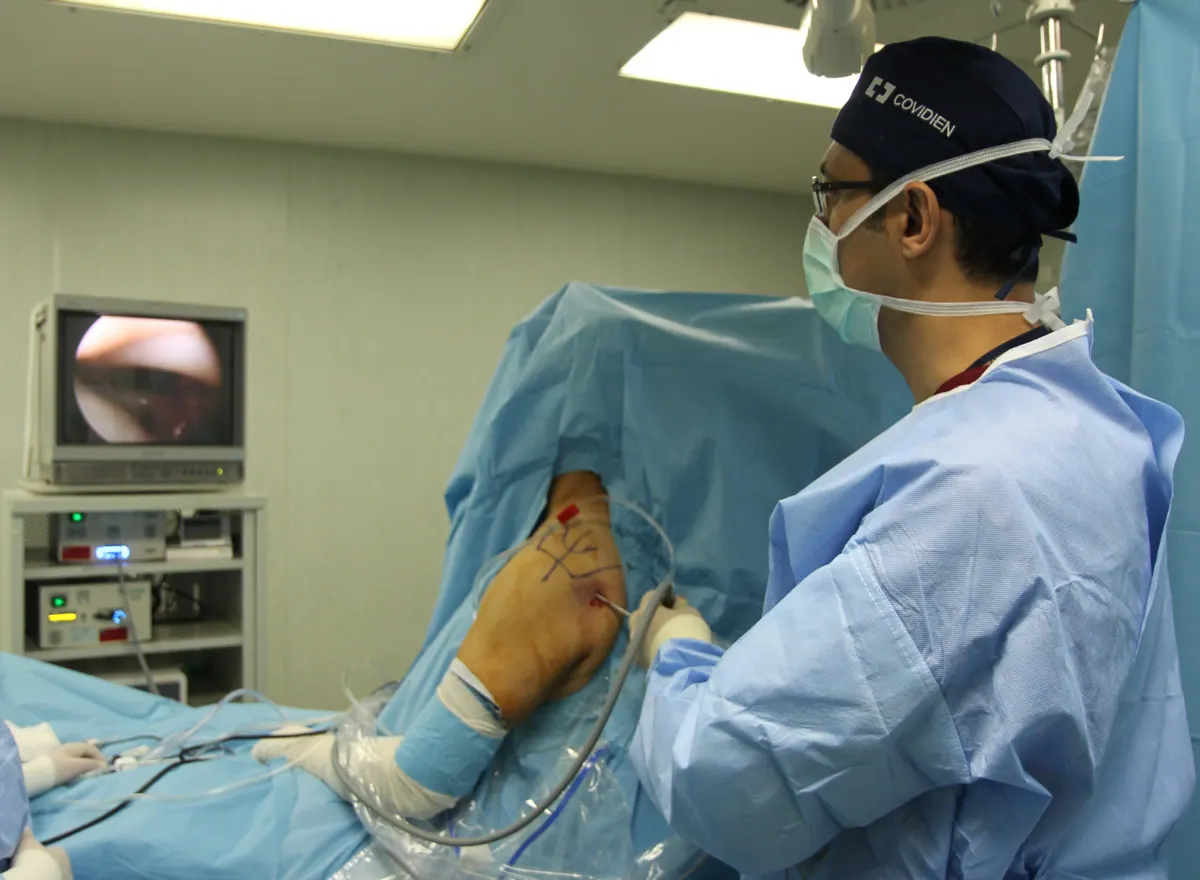
The patient usually receives general anaesthesia, sometimes regional anaesthesia (nerve block). A camera system called an arthroscope is inserted into the shoulder through 0.5 cm holes at the back and side of the shoulder. The inside of the shoulder is examined and the shape and size of the tear are determined. One or two more holes are made for the suturing instruments, and the torn ends and their attachment to the bone are freshened. Suture anchors – 0.5 cm anchors made of titanium or absorbable material – are placed in the bone, and the tendon is stitched to the bone with the threads attached to the anchors.
The hospital stay is one or two days.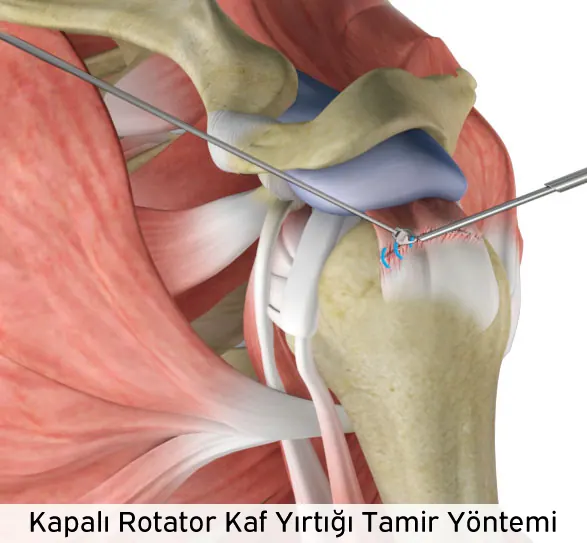
How long does recovery take after arthroscopic rotator cuff repair?
After surgery, depending on the strength of the repair, a supported (cushioned) arm sling is used for 3 to 6 weeks. Exercises begin immediately, and physiotherapy continues for at least 3 months after discharge. The shoulder can be used for daily activities after the 6th week, but active sport may be allowed after 6–9 months.
What complications can occur after rotator cuff repair?
- Failure of the tear to heal or re-tear: The tear may not heal or may recur because of older age, a large tear and weak muscle, smoking, very strenuous movement in the early period, a new injury, a repair that is not strong enough or weak bone. Re-tears are usually smaller and painless and generally do not require another operation. In case of loss of strength and severe pain, the surgery should be repeated.
- Restricted shoulder movement: Starting rehabilitation early after surgery and doing correct and sufficient exercises will prevent this complication.
The information on this page is for general information only and does not replace an examination and diagnosis.