
Paget's disease, also called osteitis deformans, is a benign chronic disease affecting one or more bones, in which bone building and breakdown are greatly increased and disorganised bone tissue is formed. Its cause is unknown: some attribute it to genetic factors, others think environmental factors and viruses may play a role.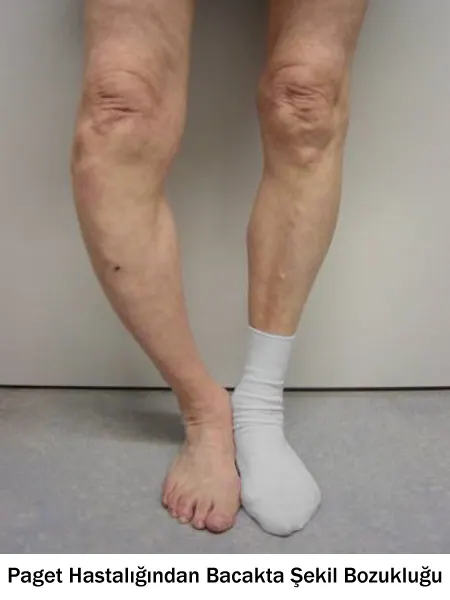 It is mainly seen in middle and old age.
Normally there is a cycle of bone building and breakdown that constantly reshapes the bone. In Paget's disease the main problem lies in the osteoclast cells that break down bone. Over time the cycle speeds up and the remodelling process is disrupted.
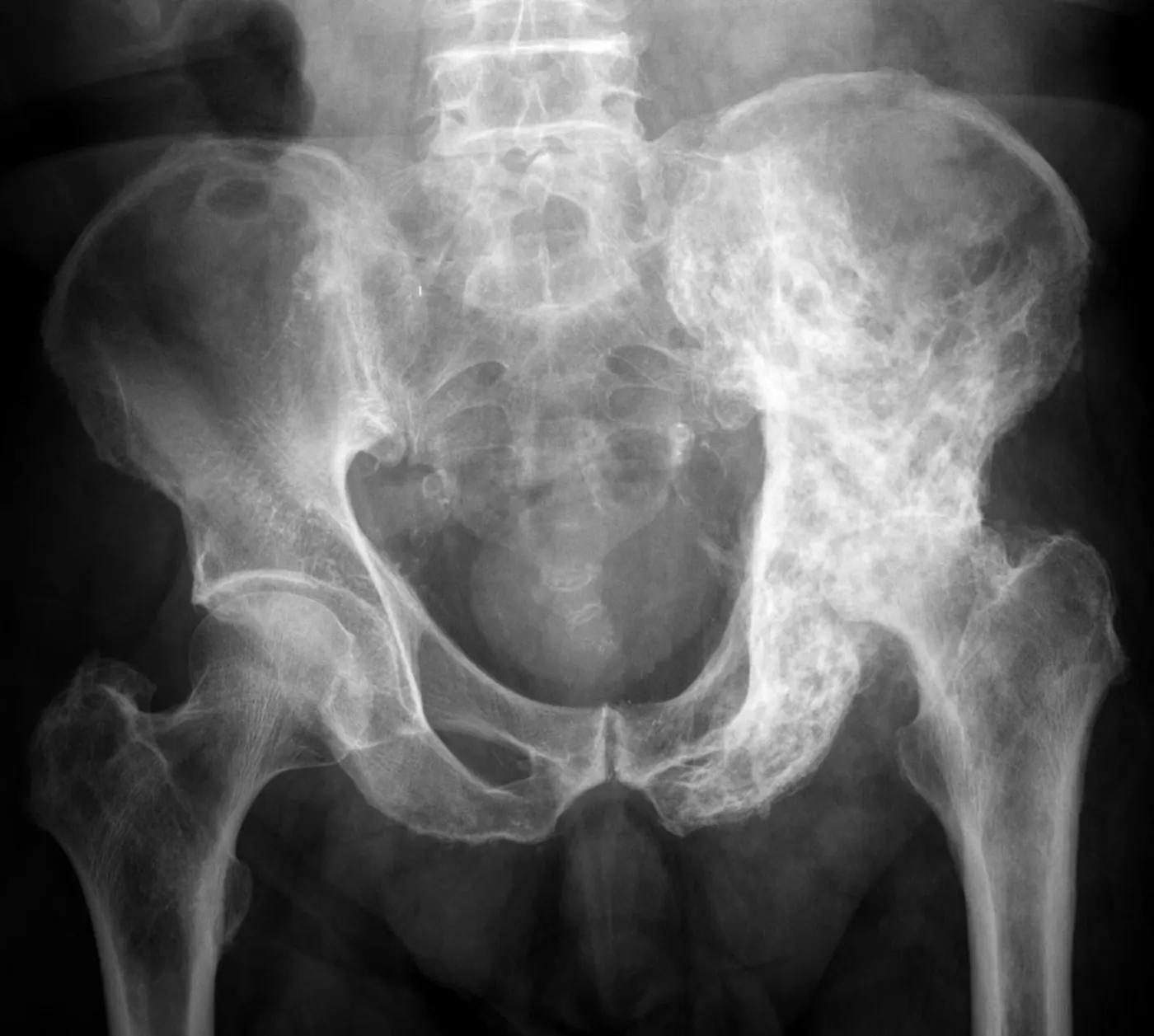
Paget's disease most often affects the spine, pelvis, coccyx, thigh, shin, skull, upper arm and collarbone. It can show itself with dizziness, weakness, tiring easily and joint stiffness, though half of patients have no complaints. When it occurs in long bones, the bone bends. There is pain in the affected bone that is constant and does not go away with rest. Over time, 2 in 1,000 Paget lesions can turn into malignant bone cancer. Steadily worsening pain, involvement of new bones and a mass spreading into the soft tissues may herald cancer.
Diagnosis is made by X-ray
Paget's disease can be diagnosed with a plain X-ray. When Paget's disease is suspected on X-ray, the blood level of "alkaline phosphatase" (ALP) must be measured.
Treatment uses drugs that reduce bone breakdown
The aims of treatment are to stop the pain, normalise the bone cycle and prevent deformities. Drugs that reduce bone breakdown are used. Patients should be monitored with serum ALP every 4–6 months, and treatment restarted if ALP rises more than 25% above the previous value.
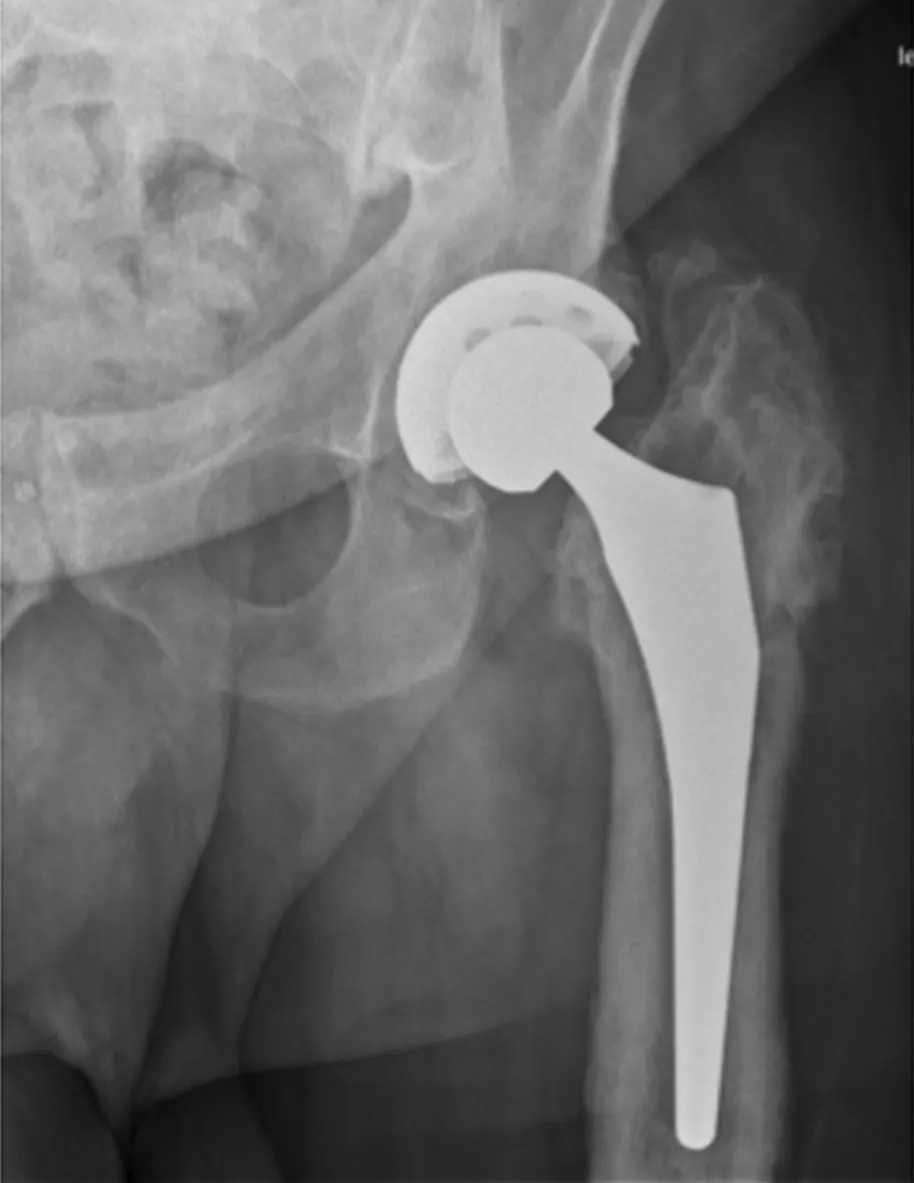
Physiotherapy, walking aids, spinal braces and muscle-strengthening exercises can contribute to treatment. However, orthopaedic intervention is needed when bones bend severely or fracture, or when there is pain from joint osteoarthritis. If joint replacement is planned for osteoarthritis, bone-loss medication should be started beforehand to reduce the increased bone turnover and so reduce bleeding.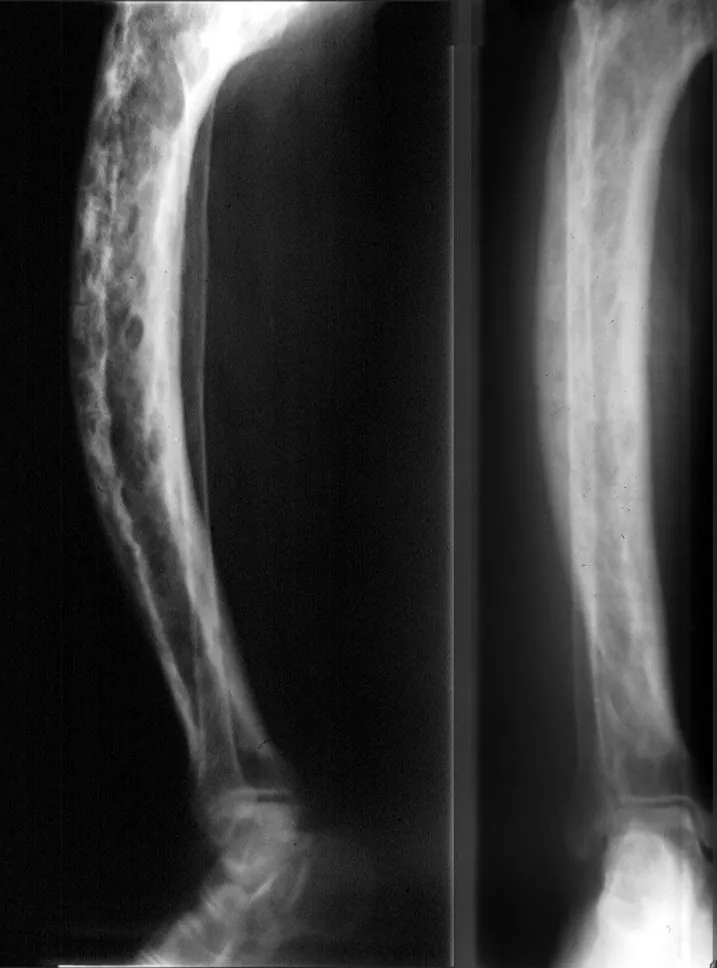
The information on this page is for general information only and does not replace an examination and diagnosis.