
Although the shoulder is the joint with the widest range of motion in the body, it is also the large joint that dislocates most often. It consists of five joints in total – three main and two functional. Compared with other joints, the stability of the shoulder is provided by soft tissues rather than bone-to-bone contact. Shoulder dislocation can be discussed as acute and recurrent dislocation.
A. ACUTE SHOULDER DISLOCATION
How and in whom does an acute shoulder dislocation occur?
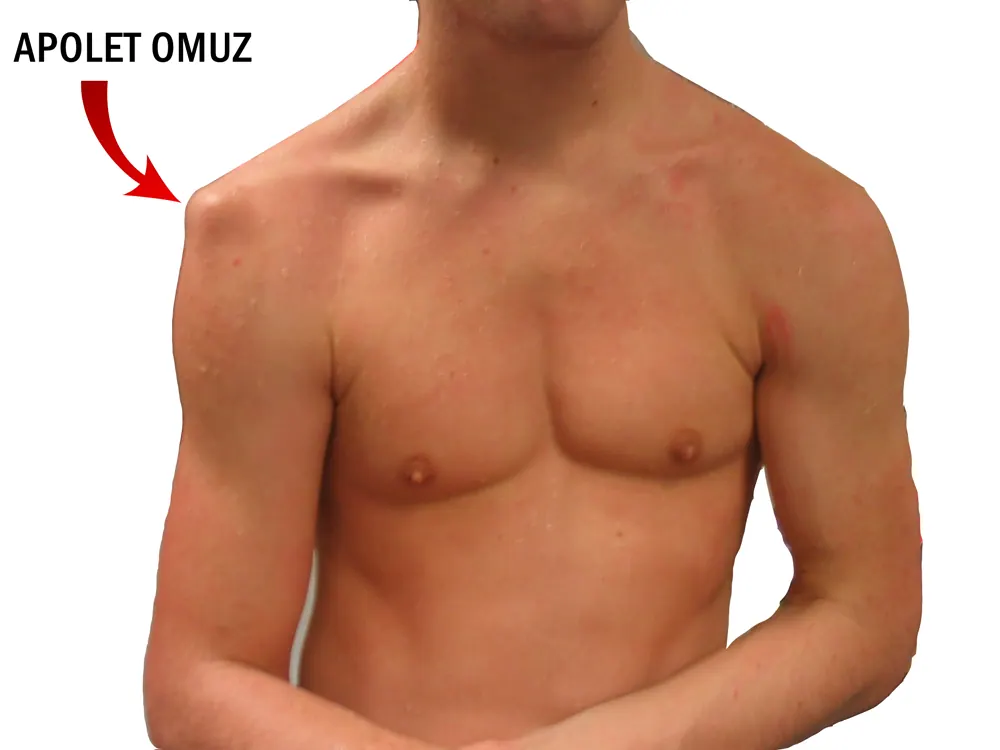
Shoulder dislocation can occur in patients of any age. It most often occurs forwards, rarely backwards or downwards. It usually happens when falling on an outstretched hand or when the shoulder is forced outwards. When the shoulder dislocates, there is swelling at the front of the shoulder and unbearable pain, and the patient cannot move the shoulder and arm.
In a young patient with a first dislocation, after the joint is put back in place without surgery, using an arm sling for three weeks is enough for healing. Because the shoulder structures of young patients are strong, some tissues have to tear for a dislocation to occur. The most common is detachment of the cartilage rim called the labrum from the bone. Laxity of the shoulder capsule is also a cause of dislocation and subluxation. Because of this damage, if the first dislocation occurs before the age of 20, the probability of a repeat dislocation is 90%. However, if the first dislocation occurs after the age of 40, this probability falls to about 10%. Recurrent dislocations damage the shoulder joint and cause osteoarthritis, and can cause permanent damage to the muscles and tendons around the shoulder. Dislocations occurring at unexpected moments can also cause additional injuries. For all these reasons, surgical treatment is recommended for recurrent dislocations.
In older patients, shoulder dislocations are often accompanied by fractures. In older patients these dislocations are treated surgically or by reduction under anaesthesia, and apart from special cases the chance of recurrence is low.
What are the symptoms of shoulder dislocation?
- A deformity called "epaulette shoulder" (squared-off shoulder)
- Severe pain and inability to move the dislocated shoulder
Treatment of acute shoulder dislocation
The dislocated joint should be put back as soon as possible. Waiting a long time makes reduction more difficult and can disturb the blood supply of the joint surfaces, causing bone death.
The muscles must be sufficiently relaxed to put the joint back. For this, sedation or, if that is not enough, anaesthesia can be used. However, if the first dislocation occurs at a young age, the chance of recurrence is high because the stabilising structures are torn. Especially in active and professional athletes, surgery to repair the torn structures may be preferred after the first dislocation. Shoulder dislocations recurring 2 or more times are also treated surgically.
B. RECURRENT SHOULDER DISLOCATION
1- Traumatic dislocations
The first dislocation usually occurs after a serious injury. Later, especially in patients under 30, dislocations or subluxations can occur during daily activities.
Recurrent dislocations can make the patient fearful, worried about the shoulder dislocating and feel the need to restrict daily activities. Such cases require surgery. However, in recurrent dislocations the joint can sometimes dislocate without a tear, due to capsule laxity. In these cases, strengthening the structures around the shoulder with physiotherapy should be tried first.
But especially when a dislocation occurs after injury, the tendon and capsule structures that hold the shoulder in place detach from the bone. The head of the shoulder comes out of the joint through this torn area; this is called a "Bankart lesion". Other structures may also be damaged with the dislocation. All this damage can be repaired arthroscopically with a closed method. Because of these features, in the medical literature these dislocations are also called TUBS instability, from the initials of Traumatic, Unilateral, Bankart lesion, Surgery.
90% of recurrent shoulder dislocations are classic traumatic dislocations. In advanced cases dislocation can happen very easily and patients often start putting the shoulder back themselves. In this case surgery is the only treatment option.
Bankart repair with arthroscopic surgery
Bankart repair can be done open or closed (arthroscopically). It is the procedure of stitching back the front labrum that has been stripped from the edge of the glenoid. This is usually done by placing anchors on the glenoid rim and stitching the labrum back with the threads coming from these anchors. Very successful results are obtained when it is done closed with shoulder arthroscopy.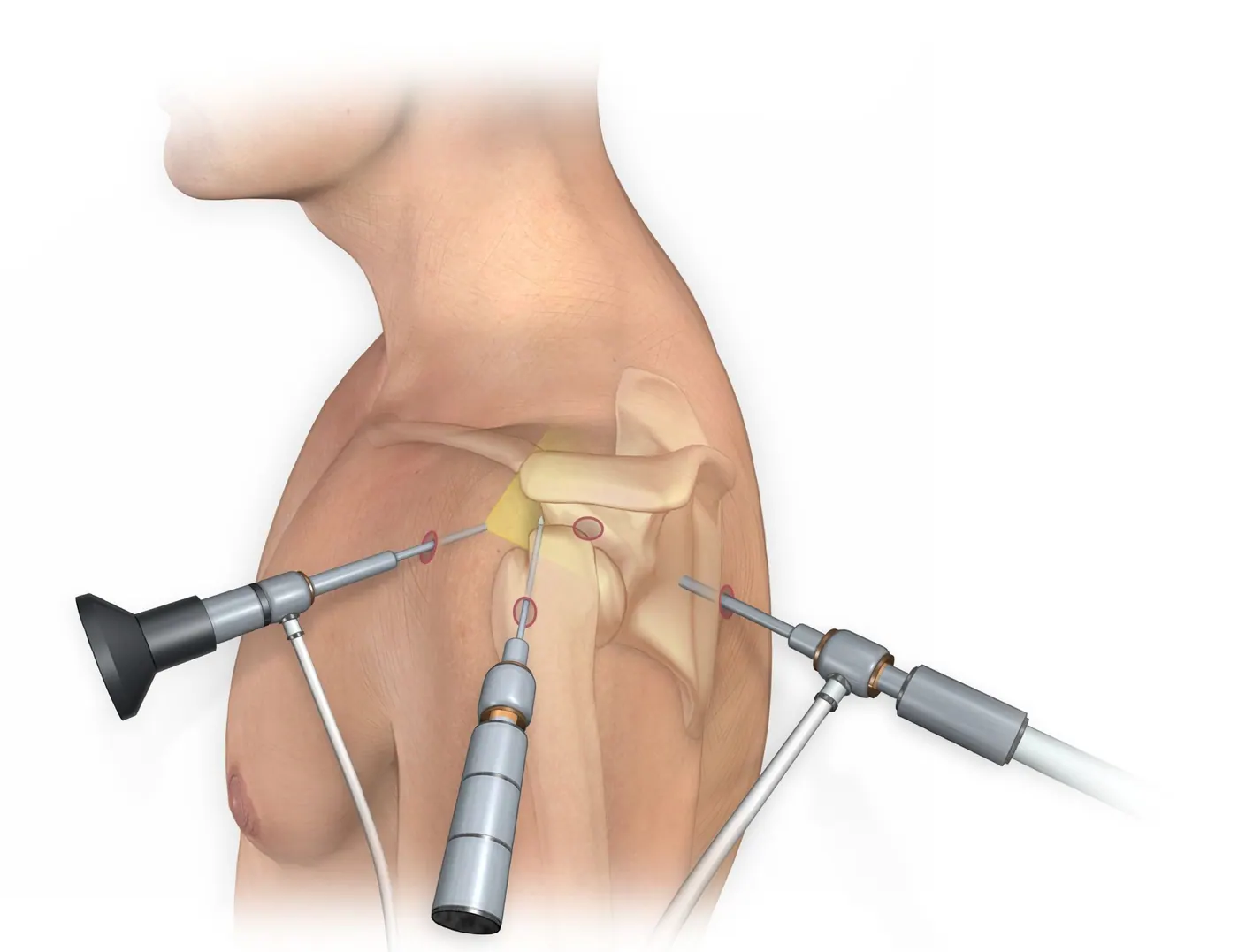 Arthroscopic surgery requires technological equipment and is a difficult procedure demanding special training. However, compared with open surgery it has many advantages: additional problems in the shoulder can be treated at the same time, the hospital stay is short, no wound care is needed, tissues heal faster, patient comfort is high, there is less pain after surgery, physiotherapy is easier and the chance of restricted shoulder movement is low. Today arthroscopic surgery achieves success of around 85–90%.
Shoulder arthroscopy is performed with a camera and various instruments reaching the joint through 3 or 4 holes about 1 cm in size. After this operation the arm stays in a sling (Velpeau bandage) for 4 weeks; with this sling the patient can eat, use a computer and write. During this time the shoulder exercises given are done in a controlled way 3 times a day. After 5–10 days the patient can manage personal care and basic daily activities. At 4–6 weeks partial active movements begin, and after 6–10 weeks active movements are done. After 10–12 weeks all shoulder movements except throwing are allowed, and after 12–16 weeks all movements are permitted. Simple sports (those not requiring the arm overhead, such as football) are allowed at 16 weeks. However, if the patient plays basketball, volleyball or tennis professionally or as an amateur – sports with intensive overhead use of the arm – full return to these sports is after 6 months.
In patients for whom arthroscopic treatment is not possible, the torn labrum can be stitched back with open techniques. There is no difference in tissue healing between the two treatments. Open treatments may require wound care, and the hospital stay may be a few days longer.
2- Atraumatic dislocations
This is the type of dislocation in which the first dislocation occurs without a significant accident, after excessive strain during daily movements (such as rotating the arm, throwing or an awkward movement); it can occur both backwards and forwards, is usually seen in both shoulders, physiotherapy is the first-line treatment and, if surgery is needed, capsule-tightening operations are performed.
In these patients the shoulder dislocates and goes back very easily. With physiotherapy in good, experienced hands, 80% are treated successfully. Those who do not respond to physiotherapy can be treated surgically.
3- Voluntary dislocations
Patients can voluntarily dislocate their shoulders forwards and backwards and put them back. There are psychological causes underneath. These patients must first stop dislocating voluntarily, which sometimes requires psychological treatment. Physiotherapy is given to patients whose dislocations continue; if dislocation still occurs with certain movements, surgery can be tried, but its success is quite low.
The information on this page is for general information only and does not replace an examination and diagnosis.