
A large proportion of fractures in children occur at the elbow, because when we fall we use our hand or elbow to stop the body hitting the ground. The elbow is also one of the joints with the thinnest soft tissue under the skin, which leaves it exposed to injury.
What are the signs of an elbow fracture?
If there is pain, tenderness and swelling in the elbow after a fall or blow, a fracture must always be considered. Children do not move a joint that hurts. With very obvious fractures there is also a visible deformity of the joint. After swelling, bruising appears over time.
What types of fracture occur around the elbow?
Fractures that may occur in children after falls and blows to the elbow are classified as supracondylar (above the elbow) fractures, condylar fractures, epicondylar fractures and fractures involving the growth plates (epiphysiolysis).
Medial and lateral epicondyle fractures:
These are fractures of the bony prominences called epicondyles on either side of the elbow's condyle. They are seen more often in children aged 9–14, usually as a separation through the growth plates here.
Supracondylar humerus fractures:
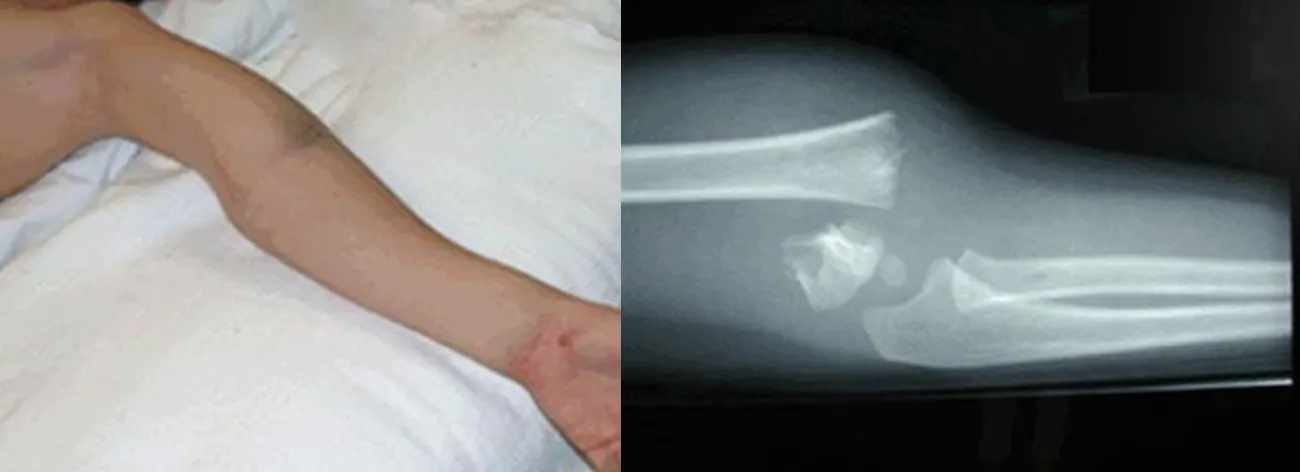
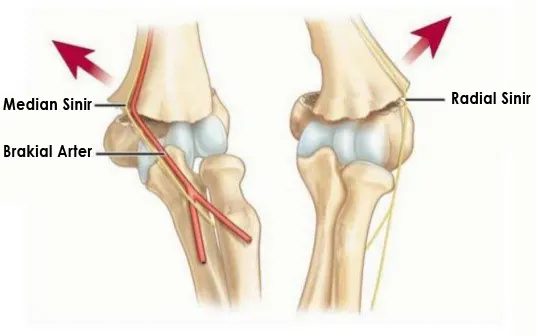 These are fractures of the humerus (upper arm bone) near the elbow. Supracondylar humerus fractures (SHF) are the most common elbow fracture in childhood, making up 50–70% of all elbow fractures. They are most common between the ages of 3 and 10 and are 2–3 times more frequent in boys than in girls. SHF in children must be taken seriously, because the broken bone ends can damage nerves or blood vessels. Circulation may be impaired by direct vessel injury or compression by the fracture, and if not treated in time, gangrene of the forearm can develop. SHF are therefore orthopaedic fractures that require early and careful treatment. Undisplaced stable fractures are immobilised in a cast in the proper position. Displaced fractures are treated surgically: after reduction with appropriate manoeuvres, crossed K-wires are inserted by closed or open surgery to fix the fracture. Fixation lasts 4–6 weeks depending on age.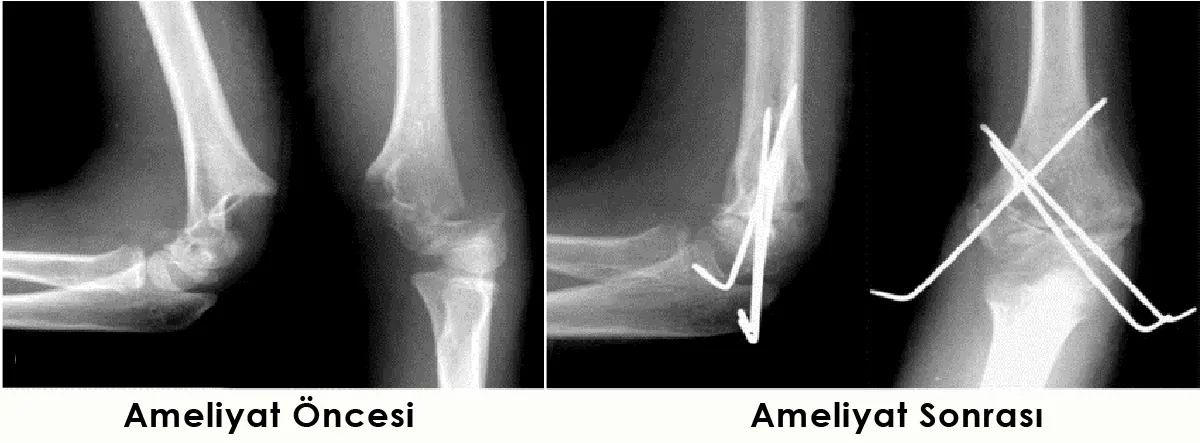
Condylar fractures:
In these fractures a part of the condyle of the upper arm bone that forms the elbow joint is broken. Because this part forms the joint surface, the fragments must be put back exactly in place; otherwise loss of joint movement may develop.
Fractures involving the growth plates (epiphysiolysis):
Another point requiring special attention in children is that if the fracture line involves the growth plate, damage to these areas can lead to angulation and shortening of the elbow in later years.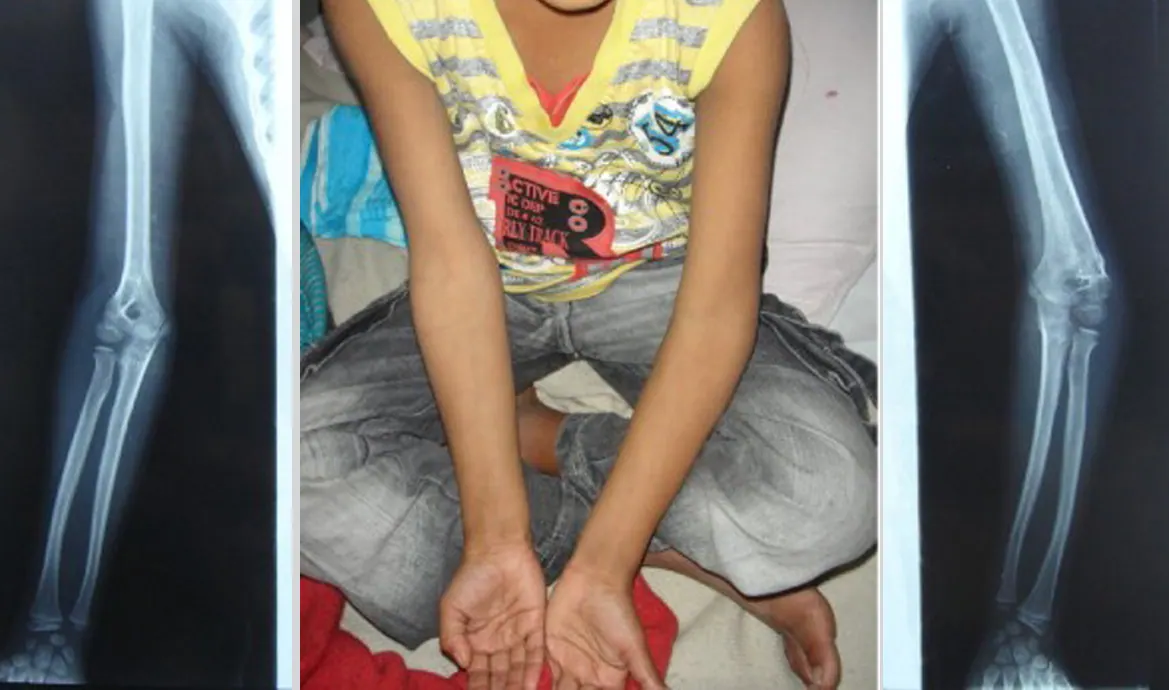 On X-ray, inexperienced doctors may confuse the growth plate, which normally appears as a gap, with a fracture, or worse, miss a fracture by taking it for the growth plate. It is therefore very important that children's fractures are assessed by a specialist. In doubtful cases an X-ray of the healthy elbow can be taken for comparison. If a cartilage fracture or separation is suspected, an MRI may be requested.
Growth plate fractures are treated by putting the fracture exactly back in place and fixing it. Sometimes the growth plate is irreversibly damaged at the time of the fracture, and despite good treatment deformity and shortening may develop over time. Patients should therefore be followed up until growth is complete.
The information on this page is for general information only and does not replace an examination and diagnosis.