
Although the exact cause is usually not clear, joint cartilage – sometimes together with the bone tissue beneath it – can separate from the joint surface and fall into the joint. Separation of cartilage from the joint surface in this way is called osteochondritis dissecans (OD), and the formation of a fragment moving around inside the joint is called a loose body ("joint mouse").
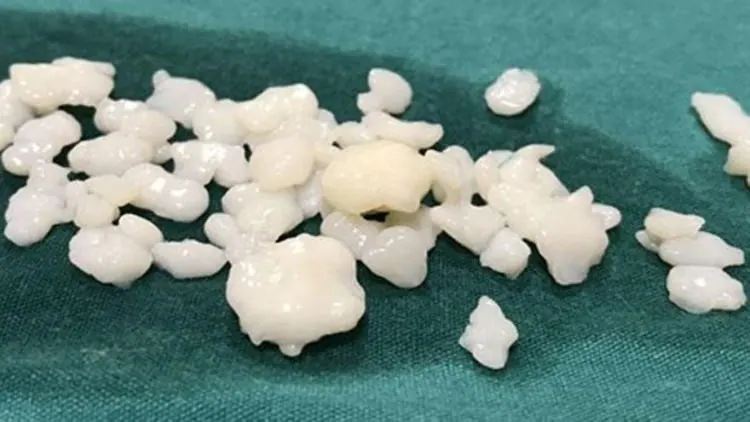
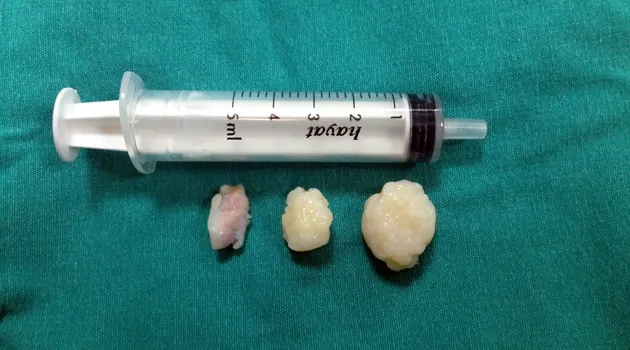 Loose bodies range from a few millimetres to a few centimetres and there may be a single one or hundreds. They are most common in the knee but also occur in other joints such as the hip, elbow, shoulder and ankle.
Why do OD and loose bodies develop?
OD is usually seen in childhood and its cause is not clearly known. In adults the likely cause is an injury tearing off cartilage together with the bone beneath it, or a piece of joint cartilage breaking off the joint surface. That is why loose bodies are more likely in people who do sport. They can also be related to rheumatic diseases, and in older patients they develop when bony spurs formed by osteoarthritis break off and fall into the joint.
What are the signs of OD and loose bodies?
In the early stage, when the cartilage starts to separate, there may be no complaints, or occasional pain and swelling. Once the fragment separates and falls into the joint it can move around; people often describe something moving inside during movement. Although this may seem harmless at first, when it gets trapped in the joint it causes catching, locking and pain. Over time it can damage the joint and lead to osteoarthritis.
How are loose bodies diagnosed?
Because at first there is only occasional pain and swelling, the diagnosis may be missed. When catching and locking are added, patients feel the need to see a doctor. The loose body may be felt on examination or shown on an X-ray. An MRI can be taken to detect cartilage fragments.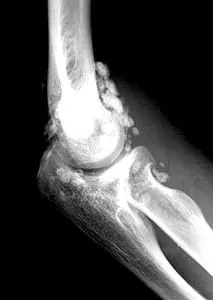
How are loose bodies treated?
In children, cartilage fragments that have lifted from the joint surface but not separated may heal with restricted activity and short-interval MRI follow-up. If complaints persist and the fragment tends to separate, it is fixed surgically with headless screws. In adults, however, once a cartilage fragment is found it should be fixed in place surgically straight away. Loose bodies moving around the joint, especially those causing catching, locking and pain, must be removed; otherwise other structures in the joint are damaged and early osteoarthritis can develop.
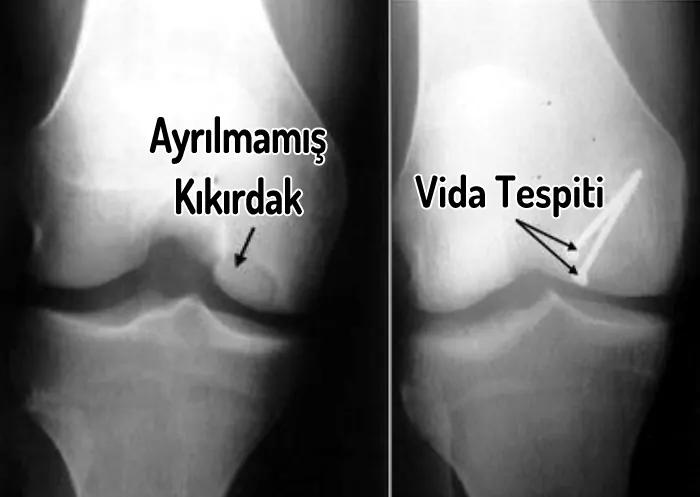
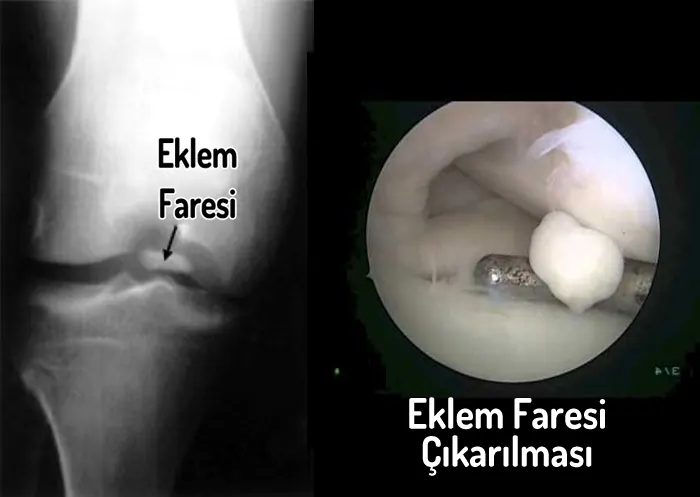
Removal of a loose body from the knee can be done arthroscopically, i.e. with a closed method. After surgery, catching, locking and pain disappear, and people quickly return to their previous mobility.
The information on this page is for general information only and does not replace an examination and diagnosis.