
Osteitis pubis, known as "the pain that strikes footballers", is one of the most important causes of pain in the groin and inner thigh. It is a disease involving an inflammatory reaction and swelling (oedema) in the pubic bone, where the two halves of the pelvis join at the front. Although the exact cause is not known, repeated trauma is thought to be responsible.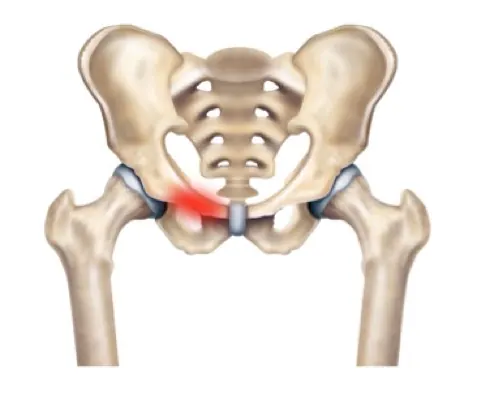
What are the symptoms of osteitis pubis, and who gets it?
The disease is mostly seen in young athletic men, often in those who play football, basketball, dance and combat sports.
Osteitis pubis should be considered when groin pain lasting more than a month increases with running, turning, kicking a ball, lying on one side, coughing and sneezing. Pain may also spread to the groin, lower abdomen, hip and testicles. At first the pain goes away as the muscles warm up, but as the disease progresses stabbing and burning pain occurs during activity too, and weakness and serious difficulty moving may develop. The pain usually increases when running, shooting and turning suddenly (movements standing on one leg). The risk is higher if the athlete always kicks with the same leg, frequently changes speed and direction, or is exposed to forceful leg splits and falls. Although it seems specific to athletes, it can also occur after pregnancy and childbirth, gynaecological or urological surgery, severe injuries, repeated minor injuries and inflammatory rheumatic diseases, and in running, football, tennis and other sports.
How is osteitis pubis diagnosed?
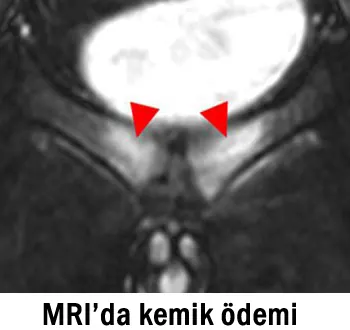
Because osteitis pubis can mean long treatment for athletes and, if surgery is needed, at least 2–3 months away from the pitch, it must be correctly diagnosed and treated. In athletes with groin pain lasting more than a month, the diagnosis can be made with a pelvic MRI. Hernia pain, which is common in the groin, should be kept in mind in the differential diagnosis.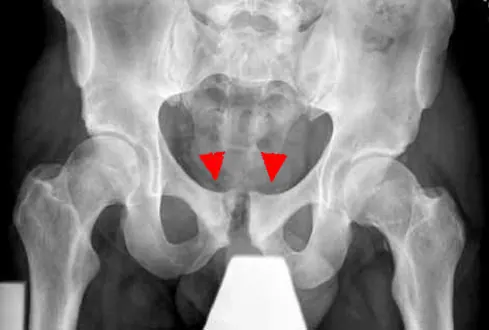
How is osteitis pubis treated?
Rest is recommended first. Non-steroidal anti-inflammatory drugs and cold application are used to reduce pain. Warm-up and stretching exercises before sport and ice after sport are recommended. After the early period, physiotherapy such as massage and manual therapy can help. Exercise therapy should relieve spasm in the abdominal and hip adductor (inner thigh) muscles and strengthen the hip abductor muscles.
If pain does not decrease with conservative treatment, injections of a cortisone and local anaesthetic mixture can be given in the groin area.
In patients who do not benefit from conservative treatment, operations are performed to resolve the bone oedema and inflammation.
The information on this page is for general information only and does not replace an examination and diagnosis.