
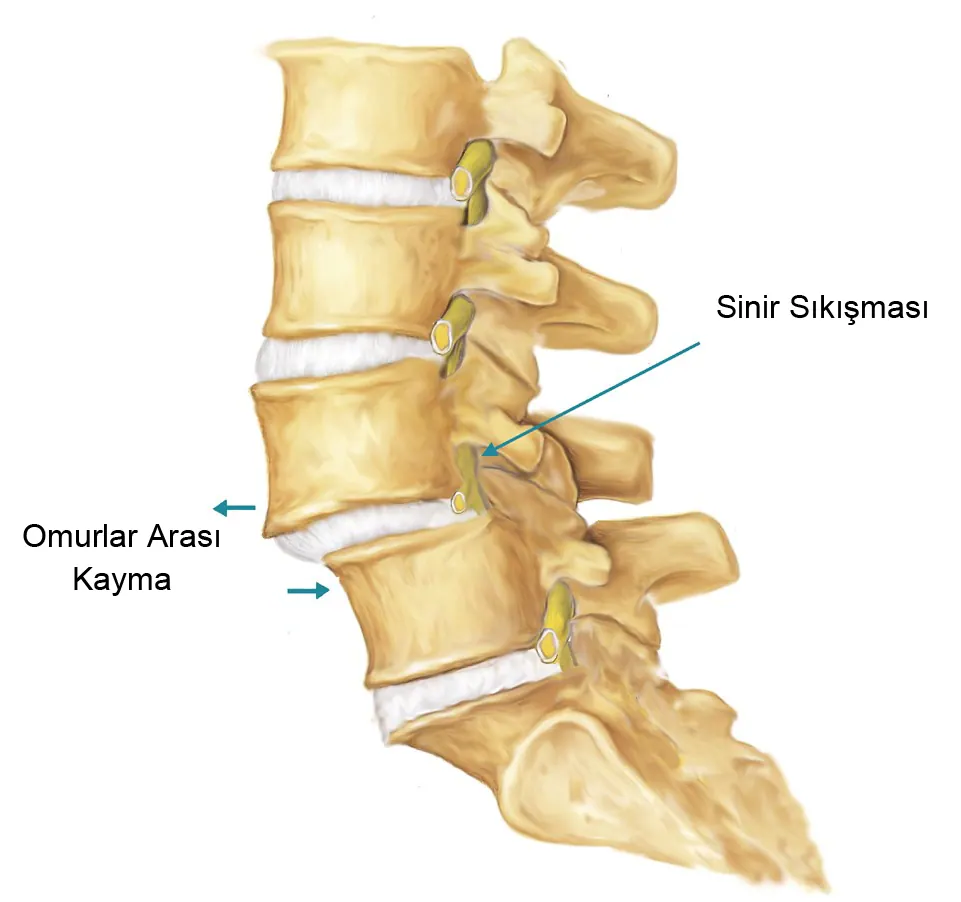
 Spondylolisthesis, often confused with a herniated disc, causes severe pain around the lower back and in the legs. It is the forward or backward slipping of one vertebra over another. As a result, the spinal canal through which the nerves pass is narrowed, causing pain, numbness and burning in both legs.
Spondylolisthesis is found in about 5% of people who complain of low back pain. The upper vertebra slips forward over the one below. The most common types are degenerative slips in older age, slips developing after surgery, and slips due to congenital problems of the vertebrae in childhood. The most common is slipping of the L4 vertebra forward over L5.
What causes spondylolisthesis?
It can be congenital or acquired and can occur at any age. It is common over the age of 40 due to ageing and wear, and in children it can result from a fall. Accidents, tumours, difficult birth and sports injuries can also cause it. In addition, osteoporosis, a herniated disc and prolonged standing are triggering factors. Rarely, it develops as a complication of previous back surgery.
What are the complaints?
It can cause persistent low back pain, stiffness in the back and legs, tenderness in the lower back, pain in the thigh and leg, tightness and spasm of the leg muscles, and limping. In advanced cases there may be numbness, tingling, muscle weakness and reduced reflexes in the legs. It shortens the patient's walking distance, so they have to stop and rest frequently while walking.
How is it diagnosed?
Questioning the complaints and physical examination are the first steps. Plain X-rays of the lower back are usually sufficient and show whether there is a crack in the vertebra. CT or MRI can be done for more detailed examination; MRI shows the structure of the spine, the joints and nerves and any nerve compression, and reveals whether there are tumours, infection or spinal stenosis that could cause similar complaints.
How is it treated?
Treatment depends on the degree of slip and pain. In patients without severe complaints or advanced slip, painkillers, physiotherapy, weight loss to reduce the load on the back and strengthening of the back and abdominal muscles should be tried. In this period without serious pain or nerve compression, rest is very important. Treatment begins by eliminating the causes that strain the back and lead to fractures or cracks in the spinal joints, and by limiting straining movements.
Surgery should be performed if pain and other complaints cannot be permanently relieved with medication and similar first-line treatments, if abnormal mobility between the vertebrae is found, or if there is persistent pain or loss of muscle strength due to pressure on the spinal cord and nerves.
In surgery, the nerves in the slipped area are freed and the vertebrae are fixed together with screws and metal rods to prevent the slip from progressing.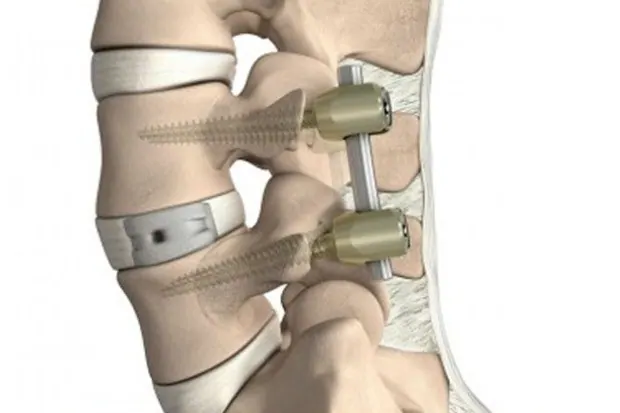
The information on this page is for general information only and does not replace an examination and diagnosis.