
Plantar fasciitis, one of the main causes of heel pain, is among the most common orthopaedic complaints. It is an inflammatory reaction of the tendon-like structure called the "plantar fascia", which forms the arch under the foot, at the point where it attaches to the heel bone.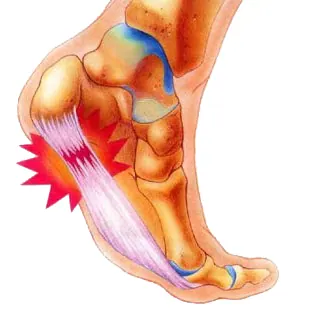
What causes plantar fasciitis?
The plantar fascia supports the arch, acts as a shock absorber, surrounds the muscles of the sole and helps walking. Strain over the years leads to inflammation of the fascia. Walking on hard surfaces for long periods, long-distance running, standing for long periods and running or walking barefoot trigger plantar fasciitis. Excessive pronation (rolling in), a high arch, tight calf muscles, wrong shoes, occupations that strain the sole (soldiers, professional athletes) and excess weight are also causes. Excess weight increases pressure on the plantar fascia ligaments and therefore the risk – which is why it is common in the last months of pregnancy.
What are the symptoms of plantar fasciitis?
Heel pain is usually felt when getting out of bed in the morning and taking the first steps. The pain returns when standing up and walking after a long rest. After walking for a while – as if the foot has warmed up – the pain gradually eases and disappears. Plantar fasciitis causes a dull pain under the heel and may also cause burning and aching. Over time the pain may become more noticeable day by day. It can affect one foot or both.
How is plantar fasciitis treated?
Although plantar fasciitis is the most common cause of heel pain, it must be distinguished from other causes for successful treatment – such as heel pad syndrome, tarsal tunnel syndrome, Baxter's neuroma (compression of the inferior calcaneal nerve, the first branch of the lateral plantar nerve) and Achilles tendinitis. Without the correct diagnosis, the pain will not go away with treatment.
Conservative treatments come first. Shoes or insoles with soft soles and arch support are recommended. The patient should avoid walking barefoot under any circumstances and avoid prolonged activities. Stretching exercises at home help reduce the pain. Medication and ice are used to reduce pain and inflammation. For long-lasting, stubborn plantar fasciitis, various interventional treatments can be used:
- ESWT (extracorporeal shock wave therapy)
- RF ablation: under local anaesthesia, the plantar fascia causing the heel pain is released or the nerve is ablated.
- Open plantar fasciotomy: preferred in patients who do not respond to other treatments but is rarely necessary; the success rate is around 70–80%.
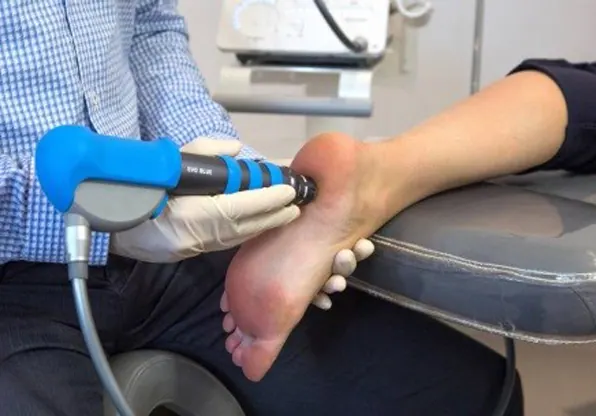
ESWT (extracorporeal shock wave therapy)
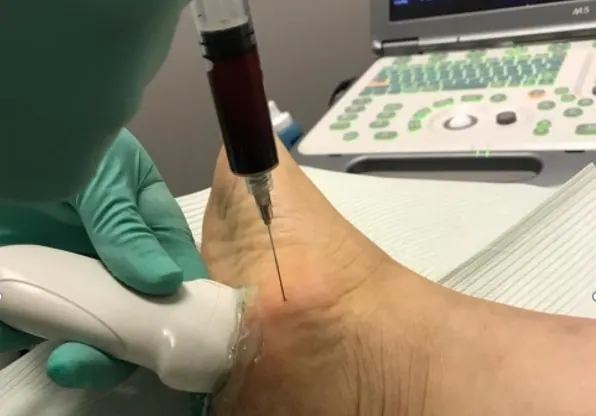
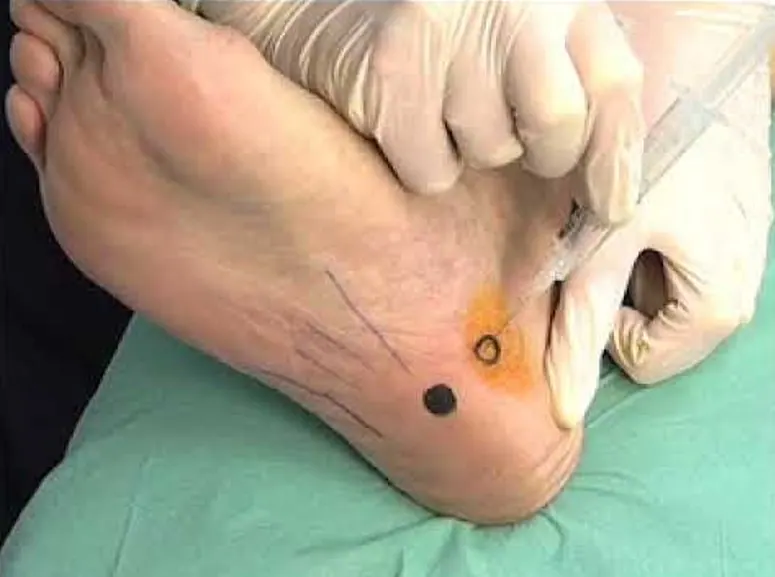
Cortisone injection
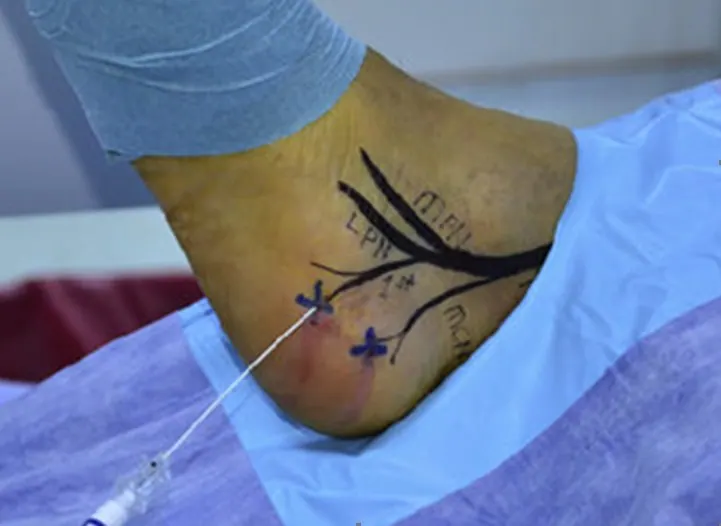
RF ablation
The information on this page is for general information only and does not replace an examination and diagnosis.