
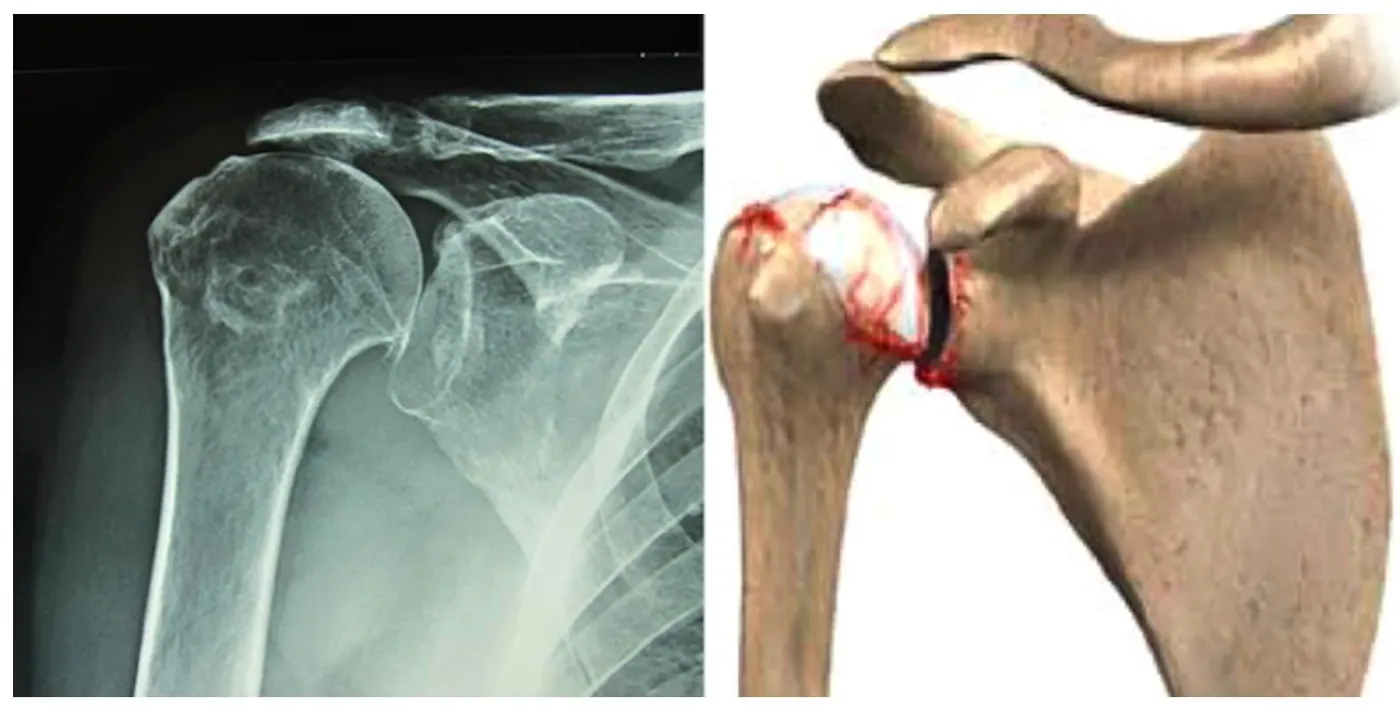
 The shoulder is the third large joint, after the knee and hip, in which arthrosis (osteoarthritis) occurs. Shoulder arthrosis (omarthrosis), popularly known as shoulder "calcification", is a progressive disease caused by wear of the cartilage covering the joint surface. Over time, the shape of the socket (glenoid) and head (humerus) that form the shoulder joint becomes distorted.
What causes shoulder osteoarthritis?
It may result from another underlying disease (a past shoulder joint infection, rheumatic diseases, impaired blood supply of the bone (avascular necrosis), a chronic rotator cuff tear, haemophilia) or a previous injury, or it may develop simply with ageing without any other disease.
What are the symptoms of shoulder osteoarthritis?
Osteoarthritis occurs through wear of the joint. The cartilage cracks and its surface becomes rough. The joint loses its smoothness, friction increases and shoulder movements become restricted. Pain increases; although it flares from time to time, shoulder pain is felt most during rest at night. With rheumatic diseases, swelling and redness may also be seen in the shoulder together with pain.
How is shoulder osteoarthritis treated?
Conservative treatments are tried first: painkillers, physiotherapy and injections into the joint. Their success depends on the degree of osteoarthritis; they are very helpful in the early stages. In later stages, however, patients cannot move their arms because of increasing restriction. Studies show that younger patients without advanced osteoarthritis but with restricted daily movement can benefit from arthroscopic capsular release and joint debridement.
In advanced osteoarthritis, because of increasing cartilage damage, shoulder replacement surgery aimed at replacing the joint becomes a suitable solution.
What is shoulder replacement?
Shoulder replacement relieves pain and allows the shoulder to move comfortably. In the operation the joint surfaces of the problematic shoulder are removed and replaced with smooth metal and plastic surfaces called a prosthesis.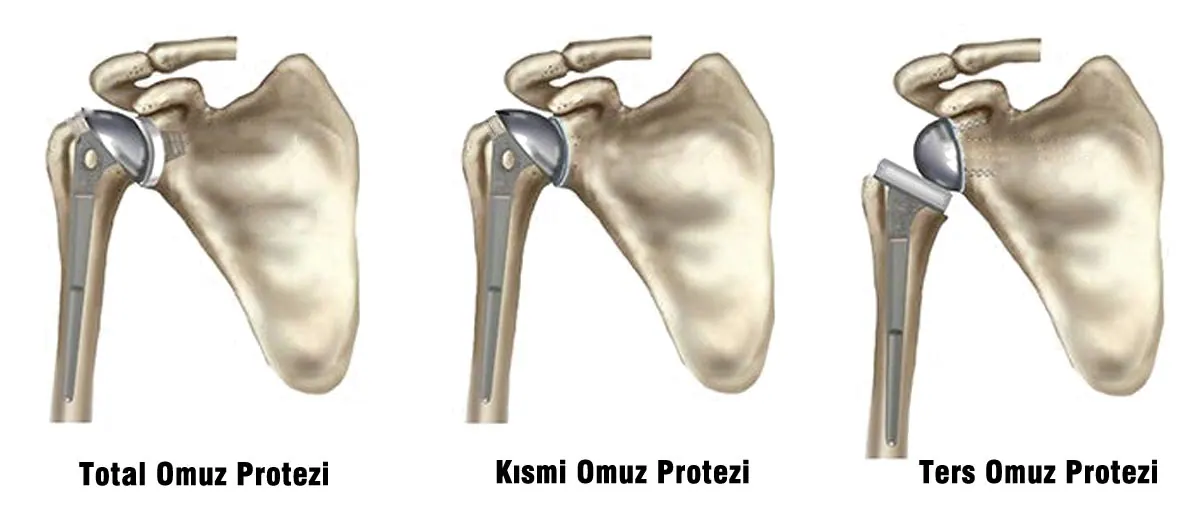 Partial joint replacement (partial arthroplasty): if the head of the humerus is damaged but the glenoid is not, only the joint surface of the humeral head is replaced.
Total joint replacement (total arthroplasty): if both the humeral head and the socket are worn, both surfaces are replaced.
Reverse shoulder prosthesis: usually in older patients, when the muscles around the shoulder (rotator cuff) are torn beyond repair, a reverse shoulder prosthesis is used.
The post-operative period is important
After surgery, exercises that open up shoulder movement and strengthen the muscles around the shoulder directly affect the success of the operation and the future. Supporting treatment with good rehabilitation therefore increases the success rate. With a good operation and physiotherapy support, patients can return to normal activities within 1.5–2 months.
The information on this page is for general information only and does not replace an examination and diagnosis.